Published November 2, 2026 · By
Roof insurance claim denied for wear and tear after wind or hail? The critical question is whether a covered event caused identifiable physical damage, not simply whether the roof is old. This guide explains how to examine the denial, document evidence, compare deductibles and depreciation, and seek a reasoned reconsideration.
Table of Contents
Why insurers deny roof claims
A roof insurance claim denied after a storm often turns on causation. The insurer may see aging shingles, poor installation, or a longstanding leak; the homeowner may see missing materials that appeared after high winds or hail. Both can be present. A storm in the neighborhood is relevant evidence but does not establish that every defect on a roof resulted from that event. The policy, inspection, and timeline must be considered together.
Begin by separating three issues: whether a covered event caused physical damage, how much work is required to repair that damage, and what the policy will pay after exclusions and deductibles. An initial denial can be challenged with new facts, but no contractor or article can guarantee reversal. Document what you know and avoid attributing every condition to the storm without support.
Read the denial letter carefully
Request the full written denial, including the provisions the insurer relied on. Determine whether the carrier rejected the entire loss, accepted limited damage, applied a deductible greater than the estimated repair, or excluded a specific roof component. These decisions require different responses. Ask which slopes were inspected and which photographs or reports support the conclusion that the damage is old.
Keep the declarations page, policy form, endorsements, and correspondence together. Search for wear-and-tear, faulty workmanship, cosmetic damage, roof-payment schedule, wind and hail deductible, and replacement-cost provisions. The Texas Department of Insurance explains that policies may cover storm damage without paying to replace a roof simply because it has aged.
Advanced claim evidence and strategy
A stronger storm-evidence packet
An effective packet links each photograph to a specific factual proposition. For example, a dated pre-storm image can establish that a ridge cap was present, while a post-storm image can show it displaced. A weather report can support that significant wind occurred nearby, but it cannot establish that the wind caused the cap to move. The inspection report should address the missing causal link by describing fastener damage, tear patterns, and the surrounding materials. Name every file consistently, keep originals, and provide a one-page index so the adjuster can find each exhibit. Where multiple storms occurred, explain why the timing is uncertain rather than selecting an unsupported event date. A transparent packet may not resolve every dispute, but it gives the reviewer a clear record to assess.
What a roof estimate should include
A credible estimate should identify roof area, waste factor, material type, labor, flashing, ventilation components, underlayment, and required safety work where applicable. It should also explain whether decking must be replaced and whether that need can be confirmed only after tear-off. Compare the contractor's estimate against the insurer's scope line by line rather than comparing two total prices. Some differences reflect local labor rates or materials; others reflect disputed damage or coverage. Ask for an explanation of each significant difference. If code upgrades are proposed, obtain the specific local requirement and check whether ordinance-or-law coverage applies. Avoid presenting every desirable upgrade as a necessary insured repair. The purpose is a repair scope that can be independently reviewed.
How to handle conflicting expert opinions
A carrier engineer and a roofing consultant may disagree about whether a mark came from hail, mechanical impact, or ordinary deterioration. Ask each professional to identify the observations that support the conclusion, the methods used, and alternative explanations considered. Check whether the report relies on photographs from the correct roof and date. A strong rebuttal responds to particular findings, not the author's credentials alone. If a report asserts that shingles are too brittle to repair, ask whether a controlled repairability assessment was performed and documented. A homeowner may need an independent expert for a large dispute, but the cost should be weighed against the potential recovery. No expert opinion can override an unambiguous exclusion, and no insurer report should be accepted without examining its factual basis.
Special rules for coastal wind coverage
Coastal properties may have separate windstorm policies, hurricane deductibles, or coverage through specialized insurers. The homeowners carrier may cover some losses while a separate wind insurer handles others. Check the named insured, insured location, dates, policy limits, and exclusions on every applicable contract. A named-storm deductible may differ from the ordinary wind deductible and can materially change the amount payable. Report a plausible loss to the appropriate carriers promptly without seeking duplicate payment for the same repair. Keep a single chronology but separate claim numbers, adjuster estimates, and decisions. If a roof was damaged by wind and lower rooms by floodwater, the coverage analysis may involve still another policy. Ask each carrier to identify the components it has accepted or excluded.
Understanding roof age and records
Roof age may be measured from installation, a documented full replacement, or another definition specified in the policy. A coating or localized repair does not necessarily reset the age of the entire roof. Obtain installation contracts, permits, manufacturer invoices, and dated photographs if the carrier has recorded the wrong year. Ask the agent to correct inaccurate underwriting information before renewal. Some roof schedules reduce payment as materials age even when a storm is the covered cause. That is a valuation issue, not necessarily a denial of causation. Review whether the policy pays for damaged roofing on an actual-cash-value basis or has special material restrictions. Do not assume a roof's age alone determines coverage; read the endorsement and examine the damage.
How to calculate the practical recovery
A realistic recovery estimate begins with the insurer's accepted covered scope, not the contractor's full proposed price. Subtract the applicable deductible and any nonrecoverable depreciation. Then determine whether replacement-cost holdback can be claimed after qualifying repairs, subject to time limits. For example, a $19,000 accepted replacement cost with a $5,000 deductible and $4,000 withheld depreciation may produce an initial $10,000 payment, with potential additional payment later if the policy conditions are met. If the contractor quotes $24,000, the difference is not automatically owed by the insurer. Ask which line items are disputed and whether the insurer will review a documented supplement. Keep emergency mitigation costs and interior damage separately itemized to avoid accidental double counting.
Appeal deadlines and recordkeeping
Insurance policies and state laws can require prompt notice, sworn proof of loss, appraisal demands, or legal action within specified periods. These deadlines are not interchangeable. An adjuster's invitation to submit additional photographs does not necessarily extend the time to sue or demand appraisal. Create a deadline sheet showing the source of each requirement, the triggering event, and the last day to act. Save email confirmations and certified-mail receipts where appropriate. If the deadline is uncertain or near, obtain advice from a licensed attorney rather than relying on a generic website. Keep a record of every substantive phone call, including date, participant, and agreed next step. Written follow-up reduces misunderstandings and helps establish what information the insurer actually received.
Deciding whether to hire help
A public adjuster may assist with documenting and negotiating a property claim where licensed, while a roofer typically focuses on construction methods and repair costs. An attorney can advise on legal rights, disputed exclusions, and deadlines. An engineer may be appropriate when structural causation is technically contested. Compare fees, experience, licensing, conflicts, and expected value before retaining anyone. Ask whether compensation is a percentage of recovery, an hourly charge, or a flat fee, and whether cancellation is allowed. Never assume professional involvement guarantees a higher settlement. For a relatively small claim below the deductible, paying for an expensive report may not be economical. For a major roof failure or looming lawsuit deadline, specialized advice can be valuable.
What to do after the final determination
If the insurer accepts additional covered damage, review the revised estimate before signing a repair contract. Confirm the payment recipient, mortgage lender endorsement, depreciation conditions, and deadlines for submitting final invoices. If the insurer maintains the denial, request its final written position and retain the supporting record. Decide whether appraisal, regulatory assistance, legal consultation, or self-funded repair is appropriate. Even when the claim remains disputed, protect the building from further deterioration and maintain coverage. Document completed work with photographs and invoices, and inform the insurer when the roof has been replaced. This record may help with future underwriting, warranties, and later claims. The goal is a safe roof and a clear, accurate financial resolution.
Understand gradual deterioration
Ordinary wear can include brittle shingles, deteriorated flashing, rusted fasteners, sealant failure, and gradual granule loss. Such conditions may reflect exposure and maintenance rather than a sudden insured event. However, an older roof can sustain additional wind or hail damage. The mere age of the roof is not a substitute for examining particular physical conditions and the policy's roof-specific limitations.
Gather maintenance invoices, roof installation records, warranties, prior inspections, and photographs. These can help establish condition before the storm, although they may also reveal preexisting issues. Do not conceal earlier leaks or repairs. A credible record acknowledges both old deterioration and new observations, then asks the insurer to allocate costs according to the actual contract.
Recognize possible wind damage
Strong wind may displace shingles, damage ridge caps, lift flashing, or expose underlayment. Inspectors may look for creases, broken attachment points, torn tabs, and patterns across roof slopes. Similar signs can also arise from improper installation or prior deterioration. A bent shingle photographed without context does not independently prove a wind loss.
Record when the storm occurred, whether debris was found, and which sections changed. Save any photographs taken before the event. Use a qualified professional for roof access; do not climb a wet or structurally damaged roof. Request a report describing observed damage and possible alternative causes, not simply a statement that the entire roof requires replacement.

Evaluate hail damage evidence
Hail can damage asphalt shingles, metal panels, tile, vents, and gutters. An inspector may compare suspected impacts on roof coverings with dents on nearby metal surfaces. Yet granule loss can arise from normal aging, foot traffic, and other sources. A reported hailstorm in a county does not establish the exact hail size or impact pattern at a particular property.
Ask for dated photographs of each slope, descriptions of test areas, and a reasoned explanation of whether the observed damage affects roofing function. Where the carrier says marks are cosmetic, request the relevant exclusion and findings. A second inspection should add physical evidence, not merely repeat that a storm happened.
Confirm the storm date
An incorrect date of loss may affect the applicable policy, deductible, and reporting deadlines. Build a timeline of the last known intact condition, severe weather, discovery of damage, emergency repairs, and all inspections. If several storms occurred, do not select a date merely because it is convenient. Explain what is documented and what remains uncertain.
The NOAA Storm Events Database can corroborate significant reported wind or hail in the surrounding area. Its records may be delayed or geographically broad. Combine official weather information with roof-specific evidence, dated photographs, and observations rather than treating a database entry as conclusive proof.
Photograph the property safely
From safe ground locations, photograph the roof elevations, displaced materials, gutters, siding, fallen branches, and nearby debris. Record interior stains and any visible daylight through damaged areas. A professional can photograph inaccessible roof slopes with suitable safety equipment. Preserve original image files and note the date, location, and subject of each photograph.
Save invoices for emergency work and ask contractors to document materials removed during repairs. The California Department of Insurance claims guide recommends preserving evidence and correspondence. Organize a single claim folder so photographs, repair estimates, adjuster findings, and communications can be compared without confusion.
Mitigate further damage
Many policies require reasonable steps to protect property after a loss. Emergency tarping, temporary sealing, or water extraction may prevent additional damage. Safety takes priority over waiting for the adjuster. Photograph conditions before work when practical, and retain receipts, samples, and notes from the crew.
Permanent replacement before inspection may make causation harder to evaluate. If immediate work is unavoidable, request detailed before-and-after documentation. Read any contractor agreement before signing; the NAIC storm guidance warns consumers to understand documents that transfer claim rights or create payment obligations. Mitigation is not permission for a contractor to make unsupported coverage promises.
Obtain a useful independent inspection
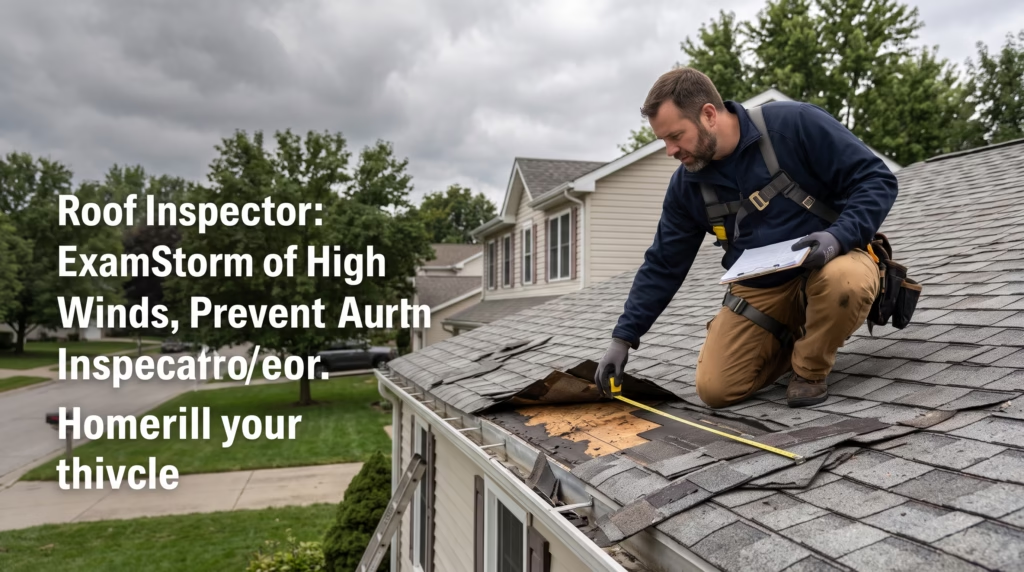
A strong report identifies the roof material, approximate age, slopes, dimensions, observed conditions, damage locations, and likely mechanisms. It distinguishes physical storm effects from deterioration, installation defects, and ordinary marks. Ask for photographs linked to a roof diagram and an itemized scope explaining which components require repair.
Verify qualifications, licensing where applicable, insurance, and references. A roofing contractor's repair expertise does not necessarily authorize negotiation of insurance claims; public adjusting is separately regulated in many states. Avoid agreements that commit you to full replacement before the insurer's position is clear. A second inspection should be factual, independent, and capable of being evaluated by another professional.
Compare the insurer's inspection
Request the carrier's photographs, estimate, measurements, and relevant expert findings. Compare them with the independent report slope by slope. Was the damaged ridge cap included? Were vents or flashing omitted? Did the inspector consider a roof opening above the interior stain? Identify each discrepancy precisely.
Distinguish disagreements about the cause of damage from disagreements about the quantity or price of repairs. A claim can be partly covered while the scope remains disputed. Ask the insurer to explain the basis for each excluded item. Written comparisons supported by labeled exhibits are more useful than generalized accusations of unfairness.
Partial repair versus replacement
An insurer may approve replacement of damaged shingles without funding a completely new roof. The homeowner may believe that a localized repair is impractical because materials are unavailable, shingles are brittle, or repairs would violate applicable codes. Matching rules vary by jurisdiction and policy. The condition of the undamaged portions also matters.
Ask the roofer to explain repairability and material availability with supporting documentation. The Texas Department of Insurance's March 2026 guidance cautions that an insurer may not replace an entire roof merely because new shingles do not perfectly match older ones. Appearance and functional repair requirements are separate questions.
Actual cash value versus replacement cost
Roof coverage may pay actual cash value, replacement cost, or an amount calculated under a roof-specific schedule. Actual cash value commonly reflects depreciation. Replacement-cost provisions may permit recovery of withheld depreciation after eligible repairs are completed and documented, subject to deadlines and conditions. Roof age and endorsements can substantially affect the result.
The NAIC roof valuation example illustrates the difference. Suppose covered work is estimated at $15,000, depreciation at $6,000, and the deductible at $2,000. An initial payment calculated with depreciation would be $7,000. Whether the $6,000 can later be recovered depends on the policy, not on the contractor's sales pitch.
Check the wind and hail deductible
Some policies apply a percentage deductible to wind, hail, or named storms rather than the ordinary flat deductible. A two-percent deductible on a $400,000 insured dwelling limit is $8,000, even when the roof repair itself costs much less. A claim can therefore involve covered damage but no payment because the loss falls below the applicable deductible.
Ask which deductible was applied and verify the calculation against the declarations and endorsements. Our insurance deductible versus premium guide
Interior water damage after roof failure
A covered wind event may create an opening that allows rain to enter, but water intrusion through deteriorated flashing or longstanding leakage may be treated differently. The location of a ceiling stain does not prove the cause of the roof failure. Photograph the interior, document the timing of the leak, and obtain a report linking observed roof conditions to the water path.
Keep separate estimates for roof repairs and interior restoration. Policies may treat mold, repeated seepage, and temporary living expenses differently. For a related distinction between roof-related water and ground-level flooding, consult Water Damage vs Flood Insurance: What's Covered?. One storm can involve several causes and more than one applicable policy.
Cosmetic damage and exclusions
A cosmetic-damage endorsement may exclude marks that change appearance without impairing roofing performance. Dents in metal panels, superficial granule changes, and visible blemishes require examination against the actual wording. Not every dent is harmless, and not every mark justifies replacement. A functional assessment should address water shedding, coating damage, attachment integrity, and manufacturer requirements.
Ask for the exact endorsement and effective date if cosmetic damage is cited. Request an explanation of how the exclusion applies to each disputed component. Even if some marks are excluded, the insurer should still evaluate separately alleged covered physical damage. Do not rely on a blanket assertion that all hail marks are functional or that all dents are cosmetic.
Faulty installation and maintenance
Improperly fastened shingles, defective flashing, and old sealant may cause leaks without any recent storm damage. The presence of such conditions does not necessarily resolve whether a separate covered event also damaged the roof. Policy exclusions and any ensuing-loss wording can affect the analysis. Gather installation records and previous repair reports.
A contractor warranty may address workmanship problems that homeowners insurance excludes, but warranty eligibility and deadlines are separate. Ask an independent professional to describe physical conditions and distinguish possible causes. Avoid making claims that a roof was perfect before the storm when the maintenance history indicates otherwise. Accuracy protects credibility throughout the dispute.
Send a focused written appeal
A reconsideration request should identify the claim number, address, date of loss, contested decision, and evidence that supports a different finding. Organize attachments as numbered exhibits: pre-storm photographs, post-storm photographs, inspection report, weather documentation, and an itemized estimate. Ask the insurer to explain any remaining disagreement and whether reinspection is available.
Use factual language rather than allegations that cannot be substantiated. A concise letter addressing a particular missed slope or incorrectly identified cause is easier to review. Our home insurance denial appeal guide
Request reinspection when evidence changes
A reinspection may be useful if the first visit omitted areas, lacked photographs, or preceded discovery of additional damage. Invite a qualified independent inspector where permitted, and prepare a roof diagram showing disputed locations. Ask the insurer to address each observation in its revised written determination.
An insurer may change its repair scope without agreeing that every claimed item is covered. Compare revised estimates carefully. A reinspection request does not automatically extend deadlines for appraisal, legal action, or contractual notice. Keep those deadlines visible while discussions continue. If an adjuster promises a response, record the date and follow up in writing.
Understand appraisal limits
Many policies allow appraisal when the parties disagree over the amount of a covered loss. Each side may select an appraiser and share certain additional costs. Appraisal can help resolve pricing or scope disputes but is not always the appropriate forum for a dispute about whether any storm damage is covered. The precise legal boundary varies by state and policy.
The Texas Office of Public Insurance Counsel
Contact your state insurance regulator
If the insurer has not adequately explained its decision or you suspect improper claim handling, a state insurance department may review a written complaint. Include the denial, policy provisions, timeline, photographs, and relevant correspondence. Regulators can seek explanations and examine compliance, but they do not necessarily resolve factual disagreements or order payment merely because a homeowner disputes an adjuster's opinion.
Avoid contractor scams
Be cautious about promises of a free roof, pressure to sign immediately, requests for unusually large deposits, and unclear assignments of insurance benefits. Check contractor credentials and obtain a written scope, price, payment schedule, and warranty. Determine who receives claim proceeds and whether you remain responsible if the insurer denies payment.
Some states restrict roofing contractors from acting as public adjusters or waiving deductibles. A licensed public adjuster may offer separate claim assistance, subject to state rules and fees. Do not sign blank documents or authorize false statements about the cause of damage. Legitimate repair work and accurate insurance documentation should reinforce each other.
Protect coverage at renewal
An unresolved roof problem may affect future underwriting or renewal decisions. Insurers may request proof of repairs, update roof age, change deductibles, or decline renewal where state rules permit. Keep permits, photographs, and paid invoices for completed work. Ask the agent to correct inaccurate roof information on the policy.
For more on renewal risks and consumer options, see Home Insurance Nonrenewal After a Claim: Next Steps. Do not allow a claim dispute to distract from keeping the property reasonably protected. Maintain continuous coverage where possible and verify whether a mortgage lender has specific insurance requirements.
Illustrative claim calculation
Consider a homeowner with a $12,000 covered roof repair estimate and a $4,000 wind deductible. Before depreciation or other limitations, the net amount would be $8,000. If the insurer accepts only $3,500 of covered work, the deductible could eliminate payment entirely. A different result might follow if a qualified inspection identifies additional covered damage and the carrier agrees.
These figures are hypothetical, not an estimate for a particular home. Keep the coverage determination separate from the arithmetic. Ask whether any withheld depreciation is recoverable, whether ordinance-or-law costs are included, and whether the policy limits roof payment based on age. Review each line of the insurer's estimate rather than focusing only on the final check.
Final action checklist
First, preserve the denial and policy. Second, document the loss date and weather. Third, photograph the roof safely and save maintenance records. Fourth, obtain a qualified inspection that distinguishes storm damage from deterioration. Fifth, compare the insurer's findings and itemized estimate. Sixth, calculate the deductible and depreciation. Seventh, submit a factual written reconsideration request with numbered evidence.
If the claim remains disputed, consider reinspection, appraisal where appropriate, a regulator complaint, and timely legal advice. Continue reasonable mitigation and retain receipts. A denial is not proof that every component is excluded, but a storm report is not proof that an entire roof must be replaced. Evidence, policy language, and deadlines should guide every step.
Sources and editorial policy
Primary references reviewed November 2, 2026: Texas Department of Insurance (March 2026), NAIC roof valuation, California Department of Insurance, NOAA, and Texas OPIC. State rules, insurance contracts, and facts vary.
Editorial bio: Meridian Pioneer is an independent U.S. consumer-finance and insurance education publisher. Its editorial team uses primary regulatory sources and clearly labeled hypothetical calculations to explain complex decisions. This article is educational and not individualized legal, financial, or insurance advice. Consult your policy and a licensed professional when rights or deadlines are disputed.