Published November 20, 2026 · By
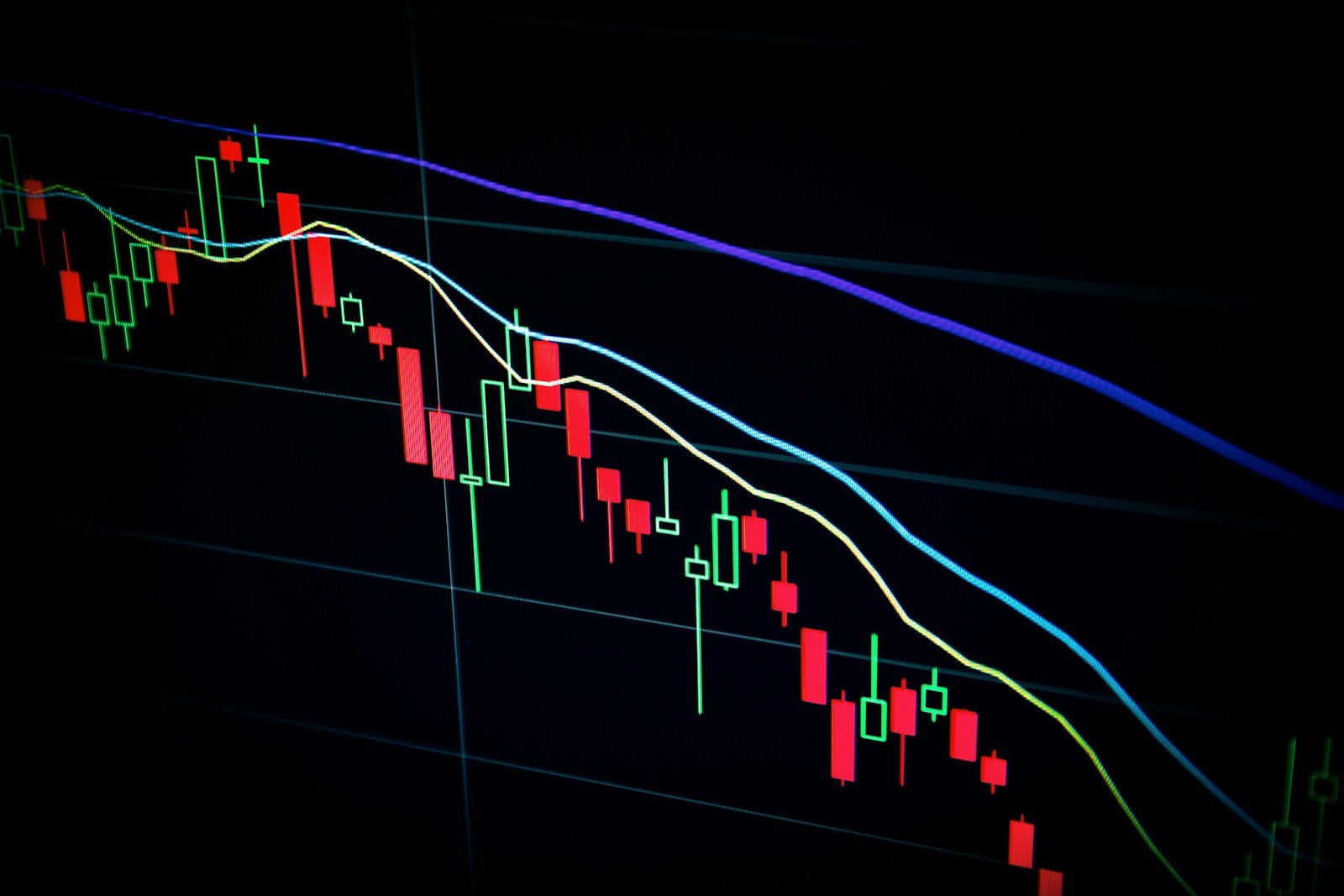
A stock market correction took hold on Friday as the S&P 500 and the Dow Jones Industrial Average fell more than 10% below their record closing highs of Oct. 6, according to Reuters. The slide was led again by technology and artificial intelligence shares, while the Nasdaq Composite erased its gain for 2026. Investors also weighed a likely Federal Reserve rate hike in December, fresh inflation worries and a weak second day of trading for Anthropic after its record IPO.
Stock Market Correction: What Happened on Friday
Wall Street extended its losses for a second straight day. In Friday afternoon trading reported by Reuters, the Dow was down about 279 points, or 0.57%, at 48,818. The S&P 500 had dropped about 148 points, or 2.06%, to 7,028. The tech-heavy Nasdaq had lost about 811 points, or 3.4%, to 23,068. These are intraday figures, and final closing levels may differ.
A correction is commonly defined as a decline of at least 10% from a recent peak. Yahoo Finance reported that the Dow and the S&P 500 crossed that line during the session. Reuters said that if those levels hold at the close, both indexes will have confirmed a correction measured from their Oct. 6 records.
A Seven-Day Losing Streak
Reuters reported that the S&P 500 was on track for its seventh straight daily decline, its longest losing streak since February 2020. All three major indexes were also headed for their largest weekly percentage drops since April 2025, when President Donald Trump announced his broad "liberation day" tariff package.
Market breadth was weak. On the New York Stock Exchange, falling stocks outnumbered rising ones by about 2.3 to 1, with 965 new lows against 32 new highs. On the Nasdaq, decliners led advancers by nearly 3 to 1.
Thursday Set the Stage
The latest losses came one day after a sharp Thursday selloff. According to a Zacks Equity Research recap published by Yahoo Finance, the Dow fell 1,101 points, or 2.2%, to 49,097.06 on Thursday, its lowest level since June. The S&P 500 lost 1% to 7,175.83, and the Nasdaq dropped 2.3% to 23,879.20. All 11 S&P sectors finished lower. We covered that session in our report on the Dow's 1,000-point drop.
Why the Stock Market Correction Is Happening
The sources point to several pressures arriving at the same time. The largest is a selloff in AI-related companies, as investors question whether heavy spending on data centers and chips will pay off. Inflation concerns and expectations of higher interest rates add to that pressure.
AI Stocks and the Anthropic IPO
Anthropic, the AI company, began trading on Thursday after pricing its shares at $83. Yahoo Finance reported that the offering raised $81.34 billion and valued the company at about $1.41 trillion. The stock rose roughly 17% in its debut but fell about 10% to 12% on Friday, giving back most of that gain. Yahoo Finance also reported that Anthropic posted $33.24 billion in revenue and a $104 billion net loss for the first three quarters of 2026.
Other technology names also fell. Reuters reported that Amazon dropped 3.1% and Meta Platforms lost 4.7%, while AI cloud providers CoreWeave and Nebius each slid more than 10%. The Philadelphia semiconductor index, which had been up as much as 106.6% for the year in mid-June, saw its year-to-date gain shrink to 21.4%.
Chuck Carlson, chief executive of Horizon Investment Services, told Reuters that many investors had hoped the Anthropic listing would mark a turning point. "A lot of people, myself included, were looking to the Anthropic debut to some extent as a clearing event, and it wasn't," he said.
The Fed and Inflation
Interest rates are the second major factor. Reuters reported that traders, according to the CME FedWatch tool, saw about a 95.5% chance that the Federal Reserve will raise rates at its December meeting. A hotter-than-expected October inflation report last week added to those expectations.
Fed Governor Lisa Cook said on Friday that the central bank's policy rate is not high enough to address current inflation levels, Reuters reported. Our earlier article explains what Cook said about delaying rate hikes. Investors are now watching the Personal Consumption Expenditures (PCE) price data due next week. The Fed's meeting dates are posted on the Federal Reserve's FOMC calendar.
Shutdown Risk and Global Tensions
Yahoo Finance listed additional concerns weighing on investors: the possibility of a U.S. government shutdown in December, continuing conflict in the Middle East and a string of recent technology outages, including problems at the Federal Aviation Administration and Microsoft.
Which Stocks Held Up
Not every part of the market fell. Reuters reported that consumer staples rose about 1.5% and health care gained about 0.7% on Friday. UnitedHealth climbed 4.7% after TD Cowen upgraded the stock to "buy." Yahoo Finance noted that real estate shares were up 6.95% for the year, compared with 3.15% for the S&P 500 at that point, and that homebuilders had shown relative strength this month.
Among the decliners outside the AI group, Intuit fell about 10.8% after cutting its revenue growth forecast and agreeing to sell Mailchimp for about $3.68 billion, while Caterpillar lost 3.6%, according to Reuters.
What Analysts Are Saying
Views on how serious the decline is vary. Carlson told Reuters that the key question for investors is whether this is a bear market, defined as a drop of 20% or more. He said the move looks to him more like a correction within a bull market, adding that such pullbacks tend to be fast and sharp.
Tom Essaye of Sevens Report Research said in comments cited by Yahoo Finance that Thursday's selloff mainly hit technology shares and that the "weakness is extending this morning," again pulling the wider market lower.
Our analysis: the sources do not suggest a single trigger. Instead, they describe a mix of AI valuation doubts, rate-hike expectations and political risks. That combination helps explain why the selloff has spread beyond chipmakers into the broader index.
Stock Market Correction: What It Means for You
For most Americans, the impact shows up in retirement accounts such as 401(k)s and IRAs, many of which hold S&P 500 index funds. A 10% decline from the October high means balances in broad stock funds are likely lower than they were six weeks ago. Corrections have happened many times in market history, and the sources do not say how long this one will last.
Practical Steps to Consider
- Review your time horizon. Money you need within a year or two is usually better kept out of volatile stocks.
- Check your allocation. A long tech rally may have left some portfolios more concentrated in AI and chip stocks than intended.
- Keep an emergency fund. Having cash on hand reduces the chance you will need to sell investments after a drop.
- Watch borrowing costs. If the Fed raises rates in December, credit card, auto loan and some mortgage rates could rise further.
- Avoid quick reactions. Selling during a fast decline can lock in losses; review your plan before acting.
The SEC's investor education site, Investor.gov, offers free guidance on asset allocation and diversification.
What to Watch Next
The next key events are Friday's official closing levels, which will show whether both indexes ended the week in a stock market correction, next week's PCE inflation data and the Fed's December rate decision. Volatility is also elevated: the Cboe Volatility Index, known as Wall Street's fear gauge, closed at 28.44 on Thursday and traded above 30 on Friday. See our report on the VIX volatility index for more.
This article is for information only and is not financial advice.
Sources: Reuters via GV Wire ("Wall Street Slides on Mounting AI Selloff, S&P 500, Dow Set to Confirm Corrections," Nov. 20, 2026); Yahoo Finance ("Dow and S&P 500 Plunge Into Correction as Tech Selloff Deepens," Nov. 20, 2026); Zacks Equity Research via Yahoo Finance ("Stock Market News for Nov 20, 2026"); Federal Reserve; Investor.gov (U.S. Securities and Exchange Commission).