Published November 21, 2026 · By
A proxy voting ruling issued Friday by the full U.S. Court of Appeals for the 5th Circuit found that the House of Representatives broke the Constitution when it let members vote remotely during the COVID-19 pandemic. In a 9-8 decision, the New Orleans-based court said the House passed the $1.7 trillion government funding package of December 2022 without the physical quorum the Constitution requires.
The decision leaves the 2022 law on the books for now, but it keeps in place an order that blocks federal officials from enforcing one part of it, the Pregnant Workers Fairness Act, against the state of Texas. Below is what the court decided, how each side has responded and what the proxy voting ruling could mean for workers and employers.
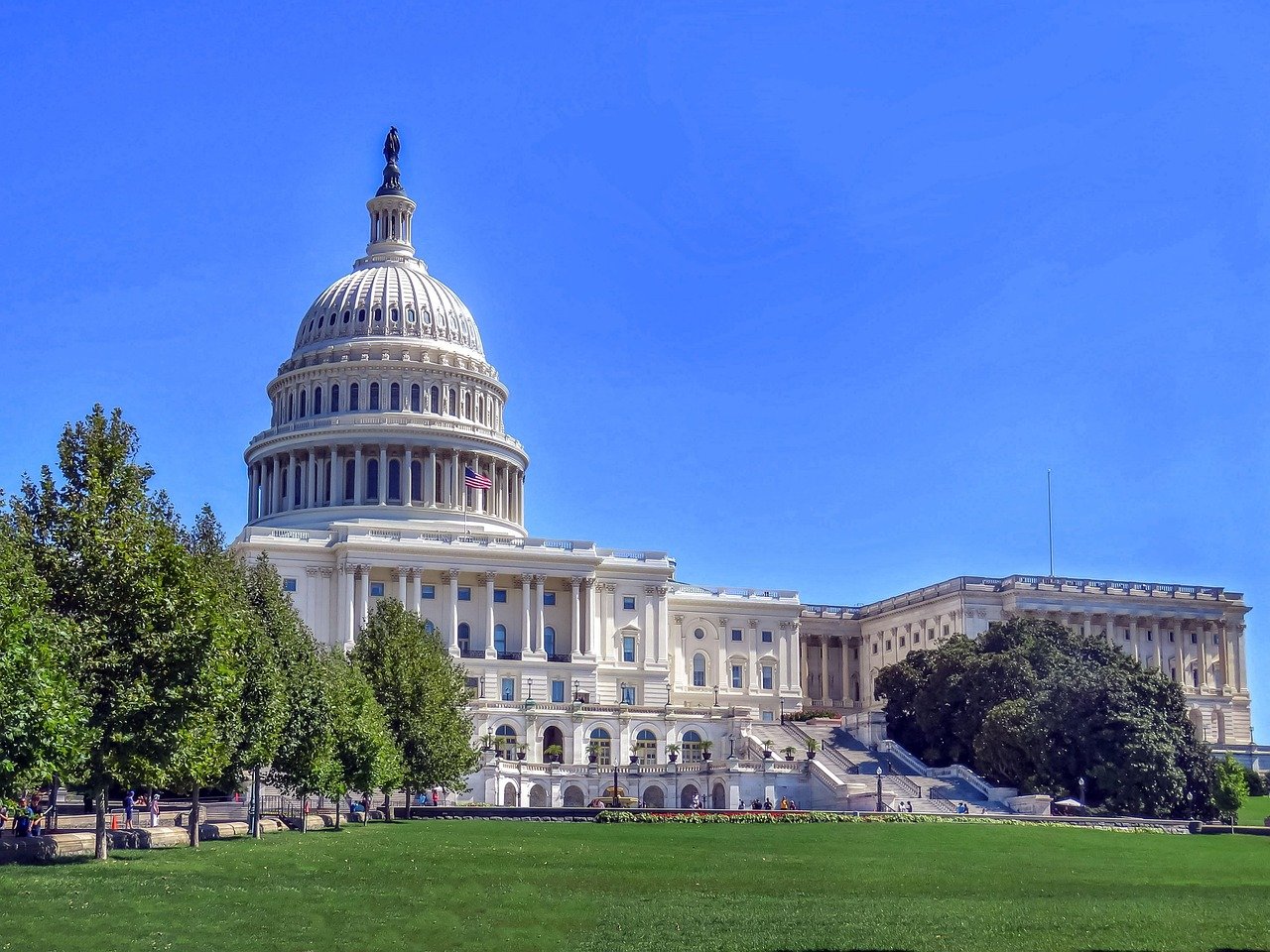
What the Proxy Voting Ruling Says
The case, State of Texas v. Blanche, was brought by Texas Attorney General Ken Paxton, a Republican who is leaving office in January. Texas argued that the House could not count lawmakers who were not in the chamber toward the quorum needed to pass a bill. The full appeals court, sitting en banc, agreed by a single vote in the proxy voting ruling.
Judge Cory Wilson, an appointee of President Donald Trump, wrote for the majority. He concluded that the Constitution’s Quorum Clause requires a majority of House members to be physically present to do business, and that a member voting by proxy does not count. According to Reuters, Wilson wrote that the Quorum Clause’s limits “cannot be circumvented by congressional fiat.”
Bloomberg Law reported that the majority relied on the clause’s text, its context, how it was originally understood and how it has been applied throughout history. Only the House used proxy voting during the pandemic; senators continued to vote in person.
The dissent
Judge James Graves Jr., an appointee of President Barack Obama, wrote the main dissent for the eight judges in the minority. Reuters reported that he called the majority’s reasoning illogical and invalid and argued that the Quorum Clause contains no physical-presence requirement. Graves also asked why, if the entire law was passed improperly, the proxy voting ruling was limited to one small part of a bill worth trillions of dollars.
A narrow remedy
Despite its broad reasoning, the proxy voting ruling has a limited practical reach. The court upheld an injunction that bars the Justice Department and the Equal Employment Opportunity Commission (EEOC) from enforcing the Pregnant Workers Fairness Act against Texas. Wilson wrote that the decision applies only to Texas’s challenge to that provision, Bloomberg Law reported. The rest of the 2022 spending law was not blocked by the proxy voting ruling.
How the 2022 Spending Law Passed
The law at the center of the case is the Consolidated Appropriations Act, 2023, which funded the federal government and was signed by President Joe Biden in December 2022. The House approved it 225-201, with 226 members voting by proxy, according to Reuters. The full text and vote history are available on Congress.gov.
House Democrats, led by then-Speaker Nancy Pelosi, adopted the proxy voting rule in May 2020 as an emergency step after the pandemic began. It let a member present in the chamber cast votes on behalf of absent colleagues. Republicans ended the practice after they won control of the House in the November 2022 elections.
Earlier lawsuits over proxy voting were dismissed by other federal courts, which pointed to the Constitution’s Speech or Debate Clause, according to Bloomberg Law. Texas took a different route by challenging how one specific law was enacted, which set up the proxy voting ruling.
The long road through the courts
- February 2024: U.S. District Judge James Wesley Hendrix ruled for Texas and blocked enforcement of the Pregnant Workers Fairness Act against the state, while leaving the rest of the law in place.
- August 2025: A three-judge 5th Circuit panel found that Congress acted within its authority when it created the proxy voting rule.
- Later: The full 5th Circuit agreed to rehear the case, which vacated the panel decision. Oral arguments took place in May.
- November 20, 2026: The en banc court issued its 9-8 proxy voting ruling for Texas.
Reactions to the Proxy Voting Ruling
The Justice Department, which defended the law, did not respond to requests for comment, and neither did Paxton’s office, Reuters reported. Bloomberg Law noted that a Democrat won the Texas attorney general race this month, meaning Republicans will no longer control the office that brought the case once the new term begins in January.
A Better Balance, a workers’ rights group that filed a brief in the case and campaigned for the pregnancy law, criticized the decision. Its president, Inimai Chettiar, said the group expects the case to reach the Supreme Court. “States cannot pick and choose which laws apply to them,” she said, and she urged the Trump administration to keep defending the law.
Texas argued throughout the case that House rules cannot override the Constitution’s quorum requirement, the position the majority adopted in the proxy voting ruling. No statements from congressional leaders of either party had been reported by Friday night.
What happens next
Bloomberg Law reported that the decision is certain to be appealed to the Supreme Court. If the justices take the case, they would decide whether the Quorum Clause requires members to be physically present and what that would mean for laws already passed by proxy votes. Bloomberg Law also noted that the proxy voting ruling could invite new challenges to other parts of the fiscal 2023 spending package.
What the Proxy Voting Ruling Means for You
For most Americans, the proxy voting ruling changes nothing immediately. The 2022 spending law remains in effect, and the court blocked enforcement of only one provision against one state government. Still, the decision touches workplace rights and retirement rules that millions of people rely on.
If you are pregnant or plan to be
The Pregnant Workers Fairness Act took effect in June 2023. It requires employers with at least 15 workers to provide reasonable accommodations for known limitations related to pregnancy, childbirth or related medical conditions, unless doing so would cause an undue hardship. Examples include extra breaks, a chance to sit, or time off for appointments. The EEOC explains the law here.
The injunction applies to Texas as a state. A Better Balance said the decision effectively erases the law’s protections in Texas, Louisiana and Mississippi, the three states in the 5th Circuit, which are home to about 20 million women. Analysis: the order itself names only Texas, but rulings from the full 5th Circuit guide lower courts across all three states, so similar challenges there could succeed more easily. Many states also have their own pregnancy accommodation laws.
If you have a retirement account
The same 2022 package included the SECURE 2.0 Act, which changed retirement rules such as automatic enrollment in new workplace plans, the age for required withdrawals and higher catch-up contributions for people ages 60 to 63. A 2024 Thomson Reuters analysis noted that a party with proper standing could try the same argument against those provisions. Analysis: no such ruling exists today, and your current retirement plan rules remain in force.
Practical steps
- Workers needing a pregnancy accommodation should still ask their employer in writing and keep copies.
- Texas state employees may want to check their agency’s current policy, since federal enforcement against the state is blocked.
- Employers in the 5th Circuit should review state law and talk to counsel before changing any policy.
- Watch for a Supreme Court petition, which would decide how far the proxy voting ruling reaches.
For more on federal spending fights, see our coverage of the December shutdown risk and the battle over Trump judicial nominees.
This article is for information only and is not legal or financial advice.
Sources: Reuters (via The Spokesman-Review); Bloomberg Law; A Better Balance; Thomson Reuters Checkpoint; Congress.gov; U.S. Equal Employment Opportunity Commission.