
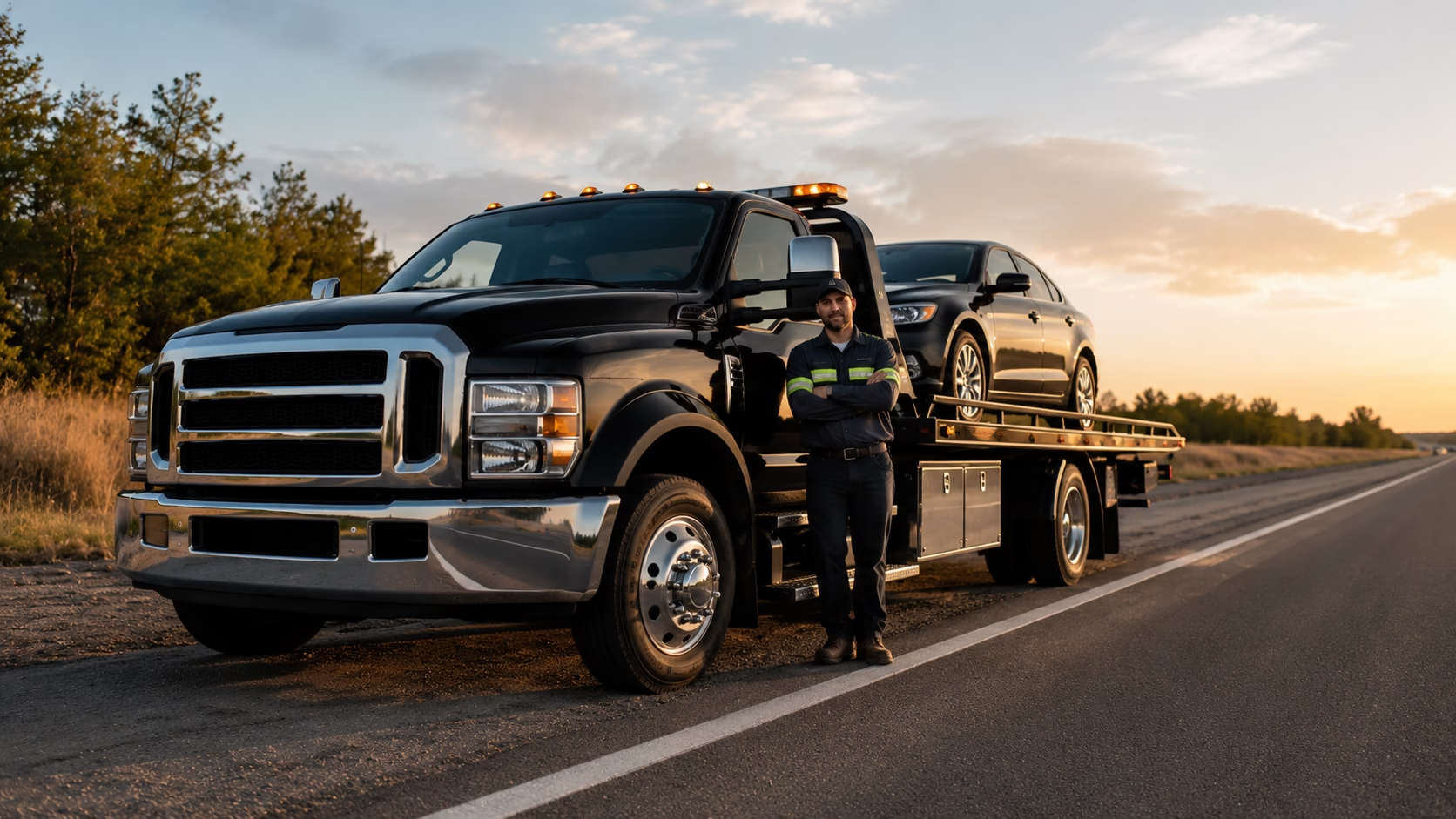
Published May 17, 2026 · By

You've got the skills, the contacts, and a plan — but a damaged credit score is standing between you and the tow truck you need to grow your owner-operator business. Tow truck financing with bad credit is not a dead end, and here's what works: thousands of operators across the U.S. secure commercial vehicle loans every year despite scores below 620.
Whether you're buying your first flatbed, adding a wheel-lift to your fleet, or replacing an aging rig, there are real programs built for people in your exact situation. Let's be real — lenders who specialize in commercial vehicle financing see bad-credit applicants every single day, and many of them still get approved.
What Is Tow Truck Financing and How Does It Work?
Tow truck financing is a type of commercial vehicle or equipment loan that lets you purchase a flatbed, wheel-lift, integrated, or heavy-duty rotator truck without paying the full price upfront. Instead, you make fixed monthly payments over a set loan term — typically between 24 and 84 months.
Here's how it works in practice: say you find a used flatbed priced at $45,000. You apply for tow truck financing through a lender or equipment finance company, get approved, and drive the truck off the lot while paying it down over time. The truck itself often serves as collateral, which is one reason lenders can be more flexible with credit requirements than they are for unsecured personal loans.
For owner-operators with bad credit, the most common paths are secured equipment loans, lease-to-own programs, and — in some cases — personal loans used for business purposes. Each option carries different interest rates, repayment terms, and qualification criteria. What most people don't realize is that a strong business case, even with a low credit score, can tip the scales in your favor.
Commercial lenders may also weigh your time in business, monthly cash flow, and existing contracts with dispatch services. A two-year business history with consistent revenue often matters just as much as your FICO score. So how do you make yours stand out? The answer is preparation — and knowing which lenders actually work with profiles like yours.
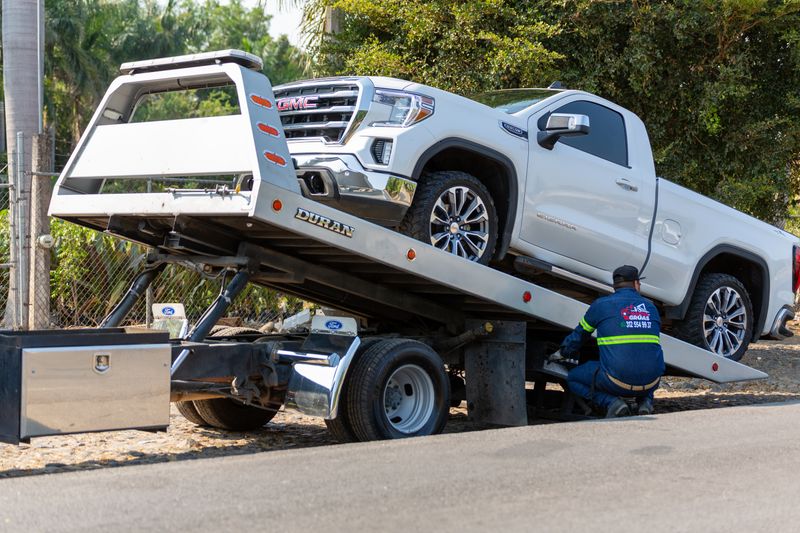
5 Real Benefits of Tow Truck Financing for Owner-Operators
1. Tow Truck Financing Keeps Your Cash Flow Intact
Buying a tow truck outright drains the capital you need for insurance, fuel, permits, and day-to-day operations. Financing lets you spread the purchase cost over months or years so your working capital stays available for what the business needs right now.
For a new owner-operator, that financial breathing room can be the difference between staying operational during slow months and closing before you gain traction.
2. You Build Business Credit While You Pay
Every on-time payment on a commercial equipment loan gets reported to business credit bureaus. That means your financing isn't just buying you a vehicle — it's building a credit profile that makes future financing easier and cheaper.
After 12 to 24 months of consistent payments, you may qualify for better rates on a second truck or additional business equipment.
3. Bad Credit Doesn't Automatically Disqualify You
Specialized commercial lenders focus on your ability to repay — not just a three-digit number. If you have dispatch contracts in place or a documented schedule of routes, some lenders will approve you with scores in the low 500s.
The short answer is: bad credit makes financing harder, not impossible. Knowing where to apply changes everything.
4. You Can Finance New or Used Equipment
Tow truck financing is available for new trucks from dealers and used vehicles through private sellers or auctions. Financing a used truck typically means a lower loan amount, which translates to lower monthly payments — a helpful option when you're rebuilding credit and watching every dollar.
5. Tax Advantages for Business Owners
When a tow truck is used for business purposes, the interest paid on your loan may be tax-deductible. Under Section 179 of the IRS tax code, you may also be able to deduct a significant portion of the vehicle's cost in the year it's placed in service.
Always verify this with a qualified tax professional — deductibility depends on your specific setup. For broader guidance, our Tax & Legal resources cover business deductions in plain language.
Who Qualifies for Tow Truck Financing?
Qualification standards vary widely depending on whether you're applying through a traditional bank, an online lender, or a specialty equipment finance company. Here's a realistic breakdown of what each tier looks for.
Credit Score Ranges
For conventional commercial vehicle loans, a credit score of 650 or higher gets you the most competitive rates. Scores between 580 and 649 still qualify with many lenders, though at a higher APR. Some equipment finance companies specialize in bad-credit borrowers and work with scores as low as 500 — but expect stricter terms and a larger required down payment.
Income and Business Revenue
Lenders typically want your monthly gross income to be at least 3x the estimated loan payment. If you're a sole proprietor, personal income counts. If you're applying under an LLC or corporation, you'll need to show business bank statements or tax returns demonstrating consistent revenue — usually a minimum of $30,000 to $50,000 annually.
Newer operators with less revenue history may need a co-signer or a larger down payment to bridge the gap.
Time in Business and Other Factors
Some commercial lenders require at least one to two years in business. If you're just starting out, a personal loan used for business purposes may be more accessible than a traditional equipment loan. Lenders will also review your debt-to-income ratio, existing balances, and any recent bankruptcies or repossessions.
A clean record for the past 12 months — even with older blemishes — goes a long way in the approval process.
Requirements and Documents for Tow Truck Financing
Before you apply, gather these documents. Having them ready upfront is the single fastest way to shorten your approval timeline.
- Government-issued photo ID — driver's license or passport
- Proof of income — last 2 pay stubs, or if self-employed, the last 2 years of federal tax returns (Form 1040 + Schedule C)
- 3 to 6 months of business or personal bank statements
- Proof of business ownership — Articles of Incorporation, LLC Operating Agreement, or DBA registration certificate
- Commercial driver's license (CDL) if the truck class requires one for legal operation
- Proof of commercial insurance or a binder/quote showing coverage intent
- Truck details — VIN, year, make, model, mileage, and dealer invoice or private seller asking price
- Employer Identification Number (EIN) if applying as a business entity
- Voided business check for ACH payment setup
Some lenders may also request a business plan or proof of existing dispatch contracts when your credit score falls below 580. Think of it as making the lender's yes easier to reach.

Best Lenders for Tow Truck Financing in 2026 — Comparison
Not all lenders handle commercial vehicle financing the same way. The table below covers real U.S. lenders offering personal or small-business loans that can be used for tow truck financing, including options for borrowers with imperfect credit histories.
| Lender | APR Range | Loan Amount | Min. Credit Score | Time to Fund |
|---|---|---|---|---|
| LightStream | 6.99% – 25.49% | $5,000 – $100,000 | 660 | Same day – 2 days |
| SoFi | 8.99% – 29.49% | $5,000 – $100,000 | 650 | 1 – 3 days |
| Upstart | 7.40% – 35.99% | $1,000 – $50,000 | 300 | 1 – 3 days |
| Upgrade | 9.99% – 35.99% | $1,000 – $50,000 | 580 | 1 – 4 days |
| Prosper | 8.99% – 35.99% | $2,000 – $50,000 | 560 | 1 – 5 days |
LightStream is a strong choice for owner-operators with good-to-excellent credit who need a high loan amount and fast funding. Their vehicle and equipment loan products cover specialty purchases including commercial trucks, and they charge no origination fees — which keeps your total cost lower.
SoFi offers flexible repayment terms and a member-benefits program that includes financial planning tools and career resources — useful if you're building a towing operation from the ground up. Their 650 minimum credit score makes them accessible to many operators with fair credit who've been rebuilding over the past year or two.
Upstart is the standout option for bad-credit applicants. It uses AI-driven underwriting that factors in education, employment history, and earning potential alongside your credit score. With a stated minimum of 300, it's one of the few platforms where an owner-operator with a very low score still has a genuine shot at approval.
Upgrade allows joint applications, which means adding a co-borrower with stronger credit can significantly improve your rate and loan amount. This is practical for owner-operators applying alongside a business partner or a spouse with better credit.
Prosper is a peer-to-peer lending platform that may be competitive for borrowers in the 560–620 range who have been declined elsewhere. Funding timelines can run slightly longer due to the investor-matching process, so apply early if you have a specific truck you're trying to move on quickly.
For more options tailored specifically to commercial vehicles, browse our full Truck Loans category for additional comparisons and owner-operator financing strategies.
Tow Truck Financing Rates, APR, and Loan Terms in 2026
The APR you actually receive on your tow truck financing depends on several variables working together. Your credit score is the most visible factor — but lenders also weigh your debt-to-income ratio, loan term length, down payment size, and whether the loan is secured by the truck as collateral or issued as an unsecured personal loan.
Here's how APR is calculated: the base interest rate reflects the lender's cost of capital (tied to the Fed rate), and the lender adds a margin based on your individual risk profile. Origination fees — typically 1% to 8% of the loan amount — are folded into the APR, which is why two loans with the same stated interest rate can carry very different true costs.
For borrowers with bad credit (below 580), APRs on personal loans used for tow truck financing can range from 20% to 36%. With fair credit (580–669), rates typically land between 14% and 24%. Good credit (670+) opens up rates in the 8% to 14% range. What most people don't realize is that a 60-month loan at 24% APR on a $40,000 truck adds up to roughly $30,000 in total interest — which is why improving your score even 40 to 50 points before applying can save you thousands.
Loan terms for tow truck financing typically run from 24 to 84 months. A longer term lowers your monthly payment but increases total interest paid. A shorter term costs more each month but dramatically cuts what you pay over the life of the loan. Run both scenarios before you sign, and make sure the monthly payment fits your actual cash flow — not just your optimistic cash flow.
If you're also exploring personal loans for other business needs, our Personal Loan section explains how unsecured financing compares to equipment loans in rate, flexibility, and risk.
Tips to Get Approved Fast for Tow Truck Financing
- Pull your credit report before you apply. Get your free report at AnnualCreditReport.com and dispute any errors. A single inaccurate collection account can suppress your score by 40 to 80 points — and many credit reports contain at least one error.
- Save for a down payment of 10% to 20%. A meaningful down payment reduces the lender's exposure and lowers your monthly payment. For bad-credit applicants especially, it can move you from a decline to an approval — or shift your APR down by several percentage points.
- Add a co-signer if your score is below 560. A co-signer with a score of 680 or higher can help you qualify for a better rate and a higher loan amount. Make sure they understand the responsibility — they're equally liable if you miss a payment.
- Use pre-qualification tools first. Most online lenders offer a soft-credit pre-qualification check that has zero impact on your score. Get three to five estimates before you submit any full applications.
- Submit a complete document package from day one. Missing paperwork is the most common reason approvals get delayed by days or even weeks. Gather your tax returns, bank statements, business registration, and truck details before you click submit.
- Show gross bank deposits, not just net tax income. If your tax return shows low net income because of business deductions, supplement it with six months of bank statements. Many lenders use gross deposits when calculating your ability to repay — and that number is often much higher than what's on your Schedule C.
- Target lenders that specialize in bad-credit or equipment loans. A general bank may decline your file on the first pass, while a specialty lender with experience in tow truck financing evaluates it with different criteria. Before signing anything, review the FTC's guidance on personal loans so you can spot predatory terms upfront.
- Rate-shop within a 14-day window. Multiple hard inquiries for the same loan type within two weeks are typically counted as a single inquiry by the major credit bureaus. Spreading your applications out over months is far more damaging than shopping rates in a focused sprint.
Frequently Asked Questions About Tow Truck Financing
Can I get tow truck financing with no credit check?
Some buy-here-pay-here dealers and equipment leasing companies advertise "no credit check" tow truck financing, but these programs almost always come with very high interest rates, large required down payments, and restrictive repayment terms. They're a last resort, not a first option. If your credit score is low but not nonexistent, working with a lender like Upstart or Upgrade — which consider factors beyond your score — is typically a better path with more reasonable terms.
What credit score do I really need for tow truck financing?
The short answer is: it depends on the lender and the type of financing you're pursuing. For conventional commercial vehicle loans, most lenders prefer a score of 640 or above. For personal loans used toward tow truck financing, you can qualify with lenders at scores as low as 300 (Upstart) or 560 (Prosper). The lower your score, the more important your income, down payment, and documented business activity become in the final decision.
How fast can I get the money for a tow truck?
Online lenders can fund approved loans in as little as one to two business days. LightStream offers same-day funding in certain cases. Traditional banks and credit unions typically take three to seven business days. Equipment leasing companies working directly with dealers may move faster since payment goes to the seller rather than your bank account. Having all your documents organized before you apply is the single biggest factor in shortening the timeline.
Will applying for tow truck financing hurt my credit score?
A pre-qualification check uses a soft credit pull, which has no impact on your score. A full application triggers a hard inquiry, which typically lowers your score by five to ten points temporarily. The good news: multiple hard inquiries for the same loan type within a 14- to 45-day window are generally counted as a single inquiry by Equifax, Experian, and TransUnion. Rate shopping in a concentrated timeframe is far less damaging than spreading applications out over several months.
Can I get approved for tow truck financing after bankruptcy?
Yes — it's possible, but timing and bankruptcy type both matter. A Chapter 7 bankruptcy discharged more than two years ago may not disqualify you with specialty lenders, especially if your credit has recovered since then. A Chapter 13 repayment plan may require court approval before you can take on new debt. Some equipment finance companies specifically target post-bankruptcy borrowers. Expect higher APRs and a required down payment of 20% or more in most cases.
What happens if I miss a payment on my tow truck loan?
Missing a payment triggers two immediate consequences: a late fee (typically $25 to $50, or a set percentage of the payment amount) and a negative mark on your credit report if the payment is 30 or more days past due. If you fall significantly behind on a secured loan, the lender has the right to repossess the vehicle. The best move is to contact your lender before you miss a payment — many offer hardship deferral options that let you pause one payment without a credit impact, but you usually need to ask before the due date passes.
The Bottom Line on Tow Truck Financing with Bad Credit
Bad credit slows the process — it doesn't end it. Tow truck financing programs designed for owner-operators with damaged or limited credit exist across multiple lender types, from online platforms that use alternative underwriting to specialty equipment finance companies built for exactly this situation. The key is knowing your real options, preparing your documents, and applying with lenders who actually work with credit profiles like yours.
Start by pulling your credit report at no cost, calculating what you can put down, and using soft-inquiry pre-qualification tools to find your best available rate without affecting your score. When you're ready to compare more lenders and financing structures side by side, our Truck Loans section has guides built specifically for commercial operators like you. The right truck is out there — and so is the financing to get it.