
Published July 4, 2026 · By

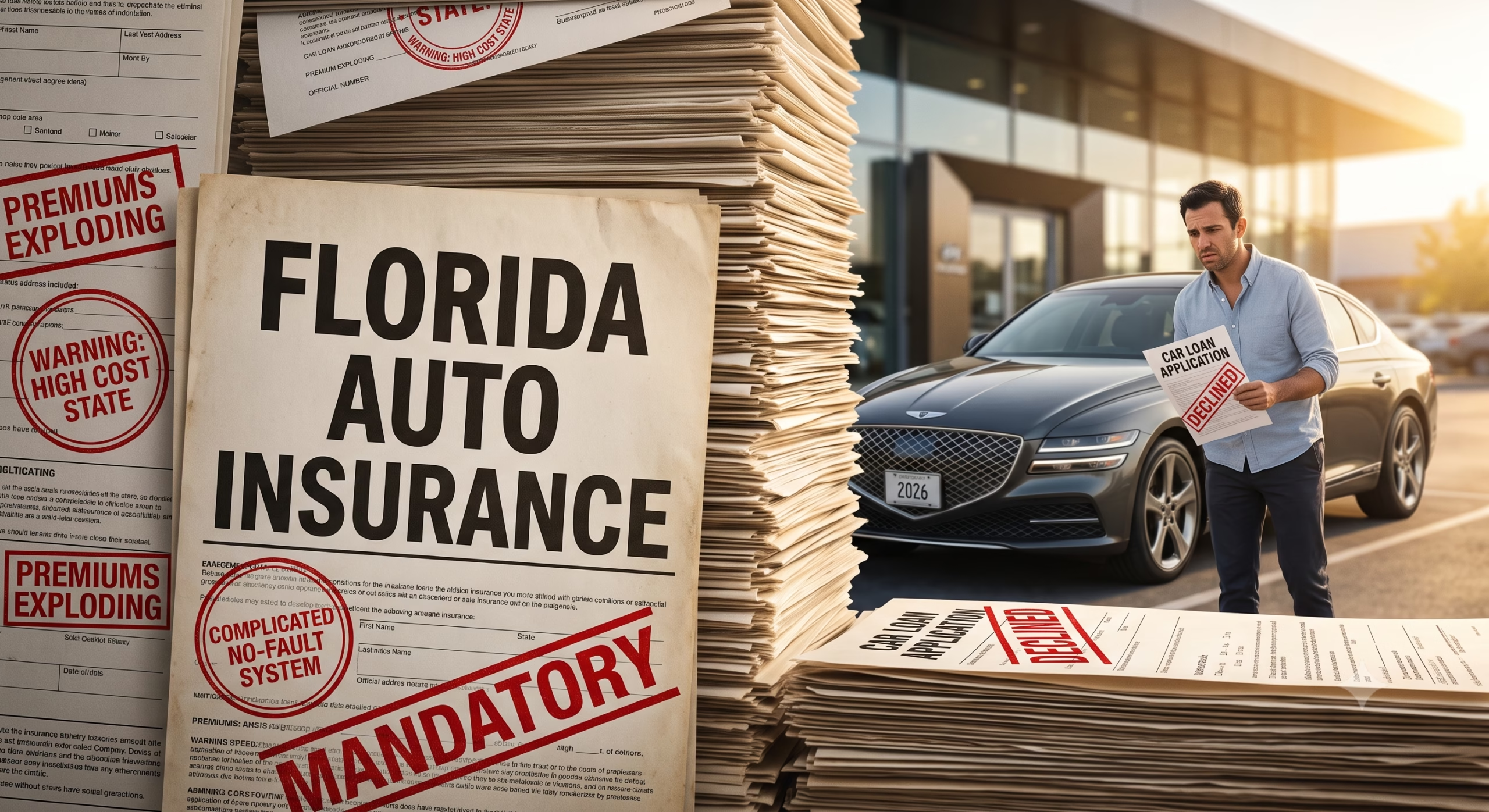
Did you just get rejected for a vehicle loan despite having solid credit? You are not alone in facing this frustrating financial roadblock across the Sunshine State.
What most people don't realize is that your monthly budget isn't just getting squeezed by the car payment itself anymore. High Florida Auto Insurance premiums are actively destroying loan applications by pushing buyers past strict debt-to-income limits.
Let's be real: when your monthly coverage costs almost as much as your vehicle financing, underwriters take notice. If you want to secure your next ride without a stressful dealership surprise, here's how to navigate this crisis.
What Is Florida Auto Insurance and How Does It Work
The short answer is that Florida Auto Insurance is a mandatory financial protection system required for all registered drivers operating vehicles in the state. Florida operates under a unique no-fault system, meaning your own policy covers your medical expenses regardless of who caused the accident.
To legally drive, you must carry a minimum of $10,000 in Personal Injury Protection (PIP) and $10,000 in Property Damage Liability (PDL). However, when you finance a vehicle, lenders will mandate that you purchase maximum comprehensive and collision coverage to protect their asset.
Consider this concrete example: if you buy a sedan with a $400 monthly payment, a lender will calculate your total cost of ownership. In Miami or Orlando, adding comprehensive coverage might easily add another $350 per month to your fixed transportation expenses.
Because the state experiences frequent extreme weather events and high litigation rates, regional premium pricing has skyrocketed compared to the national average. When underwriters evaluate your application, they bundle these mandatory coverage costs directly into your financial profile.
5 Real Benefits of Florida Auto Insurance
While the rising premium costs can present a significant financial challenge, maintaining a quality policy offers genuine protection. Here is how specialized coverage shields your personal finances from sudden disaster.
1. Quick Medical Payouts Through PIP
Because the system operates under no-fault rules, your medical bills receive immediate attention without waiting for lengthy court battles. You can receive up to 80% of necessary medical cost reimbursements quickly after a covered incident occurs.
2. Essential Protection for Florida Auto Insurance Assets
Comprehensive coverage safeguards your vehicle against regional climate risks like extreme tropical storms, severe flooding, and heavy hurricane debris. This specific component of Florida Auto Insurance ensures that natural disasters do not leave you paying off a destroyed vehicle loan.
3. Legal Defense Cost Coverage
If another driver sues you after a major highway accident, your insurance provider supplies specialized legal defense teams. These legal fees are fully covered under your liability policy limits, saving you thousands in out-of-pocket courtroom expenses.
4. Uninsured Driver Financial Insulation
The state maintains one of the highest percentages of uninsured motorists in the entire country. Carrying an optimal policy ensures your medical expenses and vehicle damage are covered even if an uninsured driver hits you.
5. Guaranteed Loan Compliance
Maintaining continuous, high-limit coverage keeps your vehicle financing contract in good standing with national lending institutions. You can avoid the severe penalties of forced-placed insurance, which is incredibly expensive and offers minimal consumer protection.
Who Qualifies for Florida Auto Insurance?
The qualification process for standard Florida Auto Insurance is open to any resident holding a valid driver's license. However, your specific premium pricing tier depends heavily on your unique credit history and driving background.
Drivers with credit scores above 700 qualify for the most competitive preferred rates across the state. If your credit score falls into the subprime band between 500 and 600, expect to face significantly higher premiums from non-standard carriers.
Income levels do not directly dictate your qualification, but they alter your capability to comfortably manage high monthly premium requirements. Lenders typically look for an income structure where total vehicle costs do not exceed 15% of gross monthly earnings.
High-risk drivers with multiple speeding tickets or a recent DUI may face restricted access to standard private markets. In these specific scenarios, individuals must access coverage through specialized high-risk pools or alternative state-regulated insurance channels.
Requirements and Documents
Securing a policy and matching loan approval requires organized record-keeping to satisfy strict underwriting guidelines. Here is what you need to gather before speaking with an agent or loan officer:
- A valid Florida driver's license or an official state identification card for all household drivers.
- Vehicle identification number (VIN) along with specific purchase order documents from your local dealership.
- Your last 2 pay stubs or 2 years of complete tax returns to verify your debt-handling capacity.
- A certified copy of your official driving record from the Florida Department of Highway Safety and Motor Vehicles.
- A formal declaration page from your previous insurer proving you have maintained continuous coverage without any recent lapses.
Having these specific items ready prevents lengthy processing delays and allows lenders to accurately calculate your total monthly obligations.
Best Lenders in 2026 — Comparison
Finding the right financing option can help balance out high premium costs. Review how competitive lenders stack up across key financial metrics in today's lending environment:
| Lender | APR Range | Loan Amount | Min. Credit Score | Time to Fund |
|---|---|---|---|---|
| SoFi | 8.99% – 25.49% | $5,000 – $100,000 | 680 | 1–2 Days |
| Upgrade | 9.99% – 35.99% | $1,000 – $50,000 | 580 | 1 Day |
| Upstart | 7.88% – 35.99% | $1,000 – $50,000 | 560 | 1–3 Days |
| Discover | 7.99% – 24.99% | $2,500 – $40,000 | 660 | 1 Day |
| PenFed Credit Union | 7.49% – 17.99% | $600 – $50,000 | 650 | 2–4 Days |
SoFi delivers highly competitive options for borrowers possessing strong credit backgrounds who need larger loan amounts. Upgrade serves as an accessible path for individuals rebuilding credit scores who require fast, next-day funding solutions. Upstart uses advanced underwriting algorithms that look past your traditional credit score to evaluate your true earnings potential.
Discover provides predictable fixed-rate solutions with zero hidden fees for consumer-conscious borrowers. PenFed Credit Union consistently delivers lower rate caps, making them an excellent choice for individuals looking to minimize overall vehicle financing costs.
Rates, APR, and Loan Terms
As of May 2026, the Federal Reserve rate is 4.25–4.50% and the Prime Rate is 7.50%. These benchmark figures directly dictate the baseline cost of borrowing money across all major consumer finance platforms.
Your ultimate Annual Percentage Rate (APR) combines the base interest rate with any administrative origination fees charged by your lender. Lenders calculate this figure by analyzing your debt-to-income ratio, where high Florida Auto Insurance costs can push your perceived risk higher.
Opting for extended terms like 72 or 84 months reduces your immediate monthly payment obligation but increases total interest paid. Balancing your loan term while utilizing an online tool like our vehicle financing calculator helps identify the sweet spot for your budget.
Tips to Get Approved Fast
Overcoming the insurance roadblock requires strategic financial planning before submitting your final paperwork. Follow this step-by-step approach to optimize your approval odds:
- Pull your credit reports for free from AnnualCreditReport.com to spot and dispute any existing errors.
- Get formal insurance quotes for the exact vehicle model you want prior to filling out any loan applications.
- Increase your planned down payment to automatically reduce the principal loan amount and lower your debt ratios.
- Choose a vehicle model known for lower average insurance premiums, such as compact crossovers or standard sedans.
- Get pre-approved with a credit union to lock in a lower interest rate before visiting a traditional dealership lot.
Taking these clear actions helps ensure your total fixed automotive costs remain well within acceptable underwriting boundaries.

Frequently Asked Questions
Can I get Florida Auto Insurance with no credit check?
The short answer is no, because standard carriers in the state utilize your credit-based insurance score to evaluate risk profiles. You can, however, find specialized non-standard brokers who offer basic liability policies without heavy traditional credit inquiries.
What credit score do I really need?
To secure favorable financing and competitive insurance rates simultaneously, you generally need a score of 660 or higher. You can still find options below this threshold, but your total monthly costs will increase significantly.
How fast can I get the money?
Many modern online lending platforms can fully fund your approved loan within 24 to 48 hours. Providing your accurate insurance details and digital pay stubs up front speeds up this verification process.
Will applying hurt my credit score?
Checking your initial pre-qualification rates uses a soft credit check that does not impact your credit score at all. A hard inquiry only occurs when you formally submit a full application to lock in a specific loan offer.
Can I get approved after bankruptcy?
Here's how it works: you can obtain financing and coverage, but you will likely need to target specialized subprime lenders. Most institutions require your bankruptcy to be fully discharged for at least one to two years before offering competitive terms.
What happens if I miss a payment?
Missing a loan or insurance payment can result in immediate late fees and negative reporting to major credit bureaus. For coverage, a payment lapse allows your lender to implement expensive forced-placed coverage to protect their investment.
Conclusion
Navigating the current vehicle market requires looking at the total picture, including how high Florida Auto Insurance rates impact your buying power. By shopping for coverage quotes ahead of time and monitoring your debt ratios, you can avoid unexpected loan rejections.
Ready to see how different loan terms fit into your current monthly budget? Check out our Insurance section and use our dedicated tools to map out your path to seamless auto approval today.
Did you just get rejected for a vehicle loan despite having solid credit? You are not alone in facing this frustrating financial roadblock across the Sunshine State.
What most people don't realize is that your monthly budget isn't just getting squeezed by the car payment itself anymore. High Florida Auto Insurance premiums are actively destroying loan applications by pushing buyers past strict debt-to-income limits.
Let's be real: when your monthly coverage costs almost as much as your vehicle financing, underwriters take notice. If you want to secure your next ride without a stressful dealership surprise, here's how to navigate this crisis.
What Is Florida Auto Insurance and How Does It Work
The short answer is that Florida Auto Insurance is a mandatory financial protection system required for all registered drivers operating vehicles in the state. Florida operates under a unique no-fault system, meaning your own policy covers your medical expenses regardless of who caused the accident.
To legally drive, you must carry a minimum of $10,000 in Personal Injury Protection (PIP) and $10,000 in Property Damage Liability (PDL). However, when you finance a vehicle, lenders will mandate that you purchase maximum comprehensive and collision coverage to protect their asset.
Consider this concrete example: if you buy a sedan with a $400 monthly payment, a lender will calculate your total cost of ownership. In Miami or Orlando, adding comprehensive coverage might easily add another $350 per month to your fixed transportation expenses.
Because the state experiences frequent extreme weather events and high litigation rates, regional premium pricing has skyrocketed compared to the national average. When underwriters evaluate your application, they bundle these mandatory coverage costs directly into your financial profile.
5 Real Benefits of Florida Auto Insurance
While the rising premium costs can present a significant financial challenge, maintaining a quality policy offers genuine protection. Here is how specialized coverage shields your personal finances from sudden disaster.
1. Quick Medical Payouts Through PIP
Because the system operates under no-fault rules, your medical bills receive immediate attention without waiting for lengthy court battles. You can receive up to 80% of necessary medical cost reimbursements quickly after a covered incident occurs.
2. Essential Protection for Florida Auto Insurance Assets
Comprehensive coverage safeguards your vehicle against regional climate risks like extreme tropical storms, severe flooding, and heavy hurricane debris. This specific component of Florida Auto Insurance ensures that natural disasters do not leave you paying off a destroyed vehicle loan.
3. Legal Defense Cost Coverage
If another driver sues you after a major highway accident, your insurance provider supplies specialized legal defense teams. These legal fees are fully covered under your liability policy limits, saving you thousands in out-of-pocket courtroom expenses.
4. Uninsured Driver Financial Insulation
The state maintains one of the highest percentages of uninsured motorists in the entire country. Carrying an optimal policy ensures your medical expenses and vehicle damage are covered even if an uninsured driver hits you.
5. Guaranteed Loan Compliance
Maintaining continuous, high-limit coverage keeps your vehicle financing contract in good standing with national lending institutions. You can avoid the severe penalties of forced-placed insurance, which is incredibly expensive and offers minimal consumer protection.
Who Qualifies for Florida Auto Insurance?
The qualification process for standard Florida Auto Insurance is open to any resident holding a valid driver's license. However, your specific premium pricing tier depends heavily on your unique credit history and driving background.
Drivers with credit scores above 700 qualify for the most competitive preferred rates across the state. If your credit score falls into the subprime band between 500 and 600, expect to face significantly higher premiums from non-standard carriers.
Income levels do not directly dictate your qualification, but they alter your capability to comfortably manage high monthly premium requirements. Lenders typically look for an income structure where total vehicle costs do not exceed 15% of gross monthly earnings.
High-risk drivers with multiple speeding tickets or a recent DUI may face restricted access to standard private markets. In these specific scenarios, individuals must access coverage through specialized high-risk pools or alternative state-regulated insurance channels.
Requirements and Documents
Securing a policy and matching loan approval requires organized record-keeping to satisfy strict underwriting guidelines. Here is what you need to gather before speaking with an agent or loan officer:
- A valid Florida driver's license or an official state identification card for all household drivers.
- Vehicle identification number (VIN) along with specific purchase order documents from your local dealership.
- Your last 2 pay stubs or 2 years of complete tax returns to verify your debt-handling capacity.
- A certified copy of your official driving record from the Florida Department of Highway Safety and Motor Vehicles.
- A formal declaration page from your previous insurer proving you have maintained continuous coverage without any recent lapses.
Having these specific items ready prevents lengthy processing delays and allows lenders to accurately calculate your total monthly obligations.
Best Lenders in 2026 — Comparison
Finding the right financing option can help balance out high premium costs. Review how competitive lenders stack up across key financial metrics in today's lending environment:
| Lender | APR Range | Loan Amount | Min. Credit Score | Time to Fund |
|---|---|---|---|---|
| SoFi | 8.99% – 25.49% | $5,000 – $100,000 | 680 | 1–2 Days |
| Upgrade | 9.99% – 35.99% | $1,000 – $50,000 | 580 | 1 Day |
| Upstart | 7.88% – 35.99% | $1,000 – $50,000 | 560 | 1–3 Days |
| Discover | 7.99% – 24.99% | $2,500 – $40,000 | 660 | 1 Day |
| PenFed Credit Union | 7.49% – 17.99% | $600 – $50,000 | 650 | 2–4 Days |
SoFi delivers highly competitive options for borrowers possessing strong credit backgrounds who need larger loan amounts. Upgrade serves as an accessible path for individuals rebuilding credit scores who require fast, next-day funding solutions. Upstart uses advanced underwriting algorithms that look past your traditional credit score to evaluate your true earnings potential.
Discover provides predictable fixed-rate solutions with zero hidden fees for consumer-conscious borrowers. PenFed Credit Union consistently delivers lower rate caps, making them an excellent choice for individuals looking to minimize overall vehicle financing costs.
Rates, APR, and Loan Terms
As of May 2026, the Federal Reserve rate is 4.25–4.50% and the Prime Rate is 7.50%. These benchmark figures directly dictate the baseline cost of borrowing money across all major consumer finance platforms.
Your ultimate Annual Percentage Rate (APR) combines the base interest rate with any administrative origination fees charged by your lender. Lenders calculate this figure by analyzing your debt-to-income ratio, where high Florida Auto Insurance costs can push your perceived risk higher.
Opting for extended terms like 72 or 84 months reduces your immediate monthly payment obligation but increases total interest paid. Balancing your loan term while utilizing an online tool like our vehicle financing calculator helps identify the sweet spot for your budget.
Tips to Get Approved Fast
Overcoming the insurance roadblock requires strategic financial planning before submitting your final paperwork. Follow this step-by-step approach to optimize your approval odds:
- Pull your credit reports for free from AnnualCreditReport.com to spot and dispute any existing errors.
- Get formal insurance quotes for the exact vehicle model you want prior to filling out any loan applications.
- Increase your planned down payment to automatically reduce the principal loan amount and lower your debt ratios.
- Choose a vehicle model known for lower average insurance premiums, such as compact crossovers or standard sedans.
- Get pre-approved with a credit union to lock in a lower interest rate before visiting a traditional dealership lot.
Taking these clear actions helps ensure your total fixed automotive costs remain well within acceptable underwriting boundaries.
Frequently Asked Questions
Can I get Florida Auto Insurance with no credit check?
The short answer is no, because standard carriers in the state utilize your credit-based insurance score to evaluate risk profiles. You can, however, find specialized non-standard brokers who offer basic liability policies without heavy traditional credit inquiries.
What credit score do I really need?
To secure favorable financing and competitive insurance rates simultaneously, you generally need a score of 660 or higher. You can still find options below this threshold, but your total monthly costs will increase significantly.
How fast can I get the money?
Many modern online lending platforms can fully fund your approved loan within 24 to 48 hours. Providing your accurate insurance details and digital pay stubs up front speeds up this verification process.
Will applying hurt my credit score?
Checking your initial pre-qualification rates uses a soft credit check that does not impact your credit score at all. A hard inquiry only occurs when you formally submit a full application to lock in a specific loan offer.
Can I get approved after bankruptcy?
Here's how it works: you can obtain financing and coverage, but you will likely need to target specialized subprime lenders. Most institutions require your bankruptcy to be fully discharged for at least one to two years before offering competitive terms.
What happens if I miss a payment?
Missing a loan or insurance payment can result in immediate late fees and negative reporting to major credit bureaus. For coverage, a payment lapse allows your lender to implement expensive forced-placed coverage to protect their investment.
Conclusion
Navigating the current vehicle market requires looking at the total picture, including how high Florida Auto Insurance rates impact your buying power. By shopping for coverage quotes ahead of time and monitoring your debt ratios, you can avoid unexpected loan rejections.
Ready to see how different loan terms fit into your current monthly budget? Check out our Insurance section and use our dedicated tools to map out your path to seamless auto approval today.