Published November 13, 2026 · By
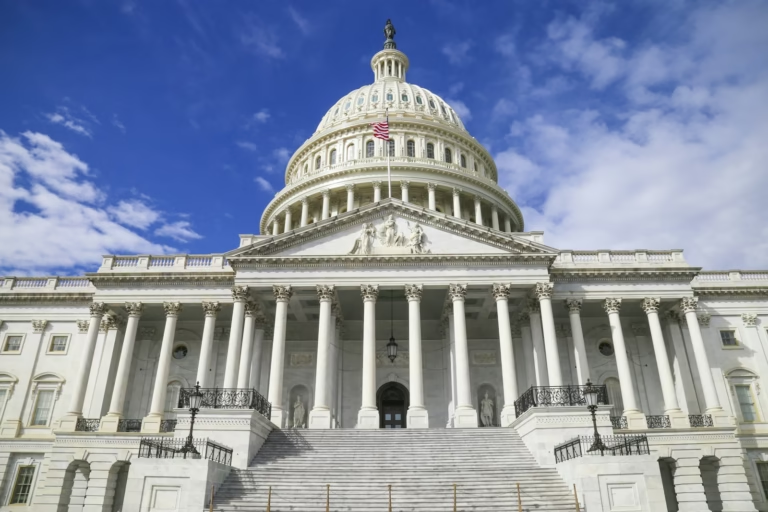
Chip export controls are back at the center of a bipartisan fight in Washington after Jensen Huang resigned as Nvidia's chief executive on Thursday, November 12. Speaker Mike Johnson, R-La., told reporters a "developing consensus" is forming in Congress to limit China's access to advanced AI chips, and Republicans are pushing to write new limits into the annual defense bill, according to Reuters. Lawmakers in both parties have also called for hearings and document requests.
Here is what happened, which bills are on the table, what each side has said and what it could mean for your money.
Why Chip Export Controls Are Back in the Spotlight
Huang stepped down days after acknowledging an extramarital relationship on Sunday, November 8. News reports have said the woman involved is an executive at Megaspeed, a Singapore company that has done business with Nvidia, and that U.S. authorities reportedly suspect she spied for China. Those reports have not been confirmed by U.S. officials on the record, and Beijing has denied that she is a spy.
The episode quickly turned into a policy debate. Members of both parties are asking whether chip export controls managed by the Commerce Department are strong enough to keep advanced AI hardware out of Chinese hands. For background on how markets first reacted, see our earlier report on Nvidia stock after the CEO exit.
What Speaker Johnson said
Johnson said Thursday that limiting China's access to advanced chips is an important stance for Congress to take, Reuters reported. A Senate aide told the news agency that Republicans want to attach export restrictions to the National Defense Authorization Act, a must-pass bill that Congress approves every year.
What Is in the Proposed Chip Export Controls
The Senate version of the fiscal 2027 defense bill is S. 4784 on Congress.gov. According to Roll Call, a proposed manager's amendment to that bill would add chip security mechanisms that let officials verify whether chips are diverted to countries of concern, plus a ban on exporting certain very powerful chips to those countries. The House version of the defense bill, which passed in July, has no similar language.
Reuters and other outlets identified at least four separate bills that could be folded into the final package:
- AI Overwatch Act: gives Congress more power to review licenses for advanced AI chip sales to China and other countries of concern.
- Chip Security Act: requires companies to track advanced AI processors after export to help stop smuggling. It is sponsored in the House by Reps. Bill Foster, D-Ill., and Bill Huizenga, R-Mich.
- Match Act: presses U.S. allies to restrict sales and servicing of chipmaking equipment to China.
- Remote Access Security Act: gives the Commerce Department tools to stop Chinese firms from renting overseas data centers that run Nvidia chips.
Roll Call reported that the House Foreign Affairs Committee advanced several of these measures in March, with the Chip Security Act passing the panel unanimously. Versions of them now appear in the Senate amendment.
How the rules work today
Chip export controls in the United States are administered by the Commerce Department's Bureau of Industry and Security, which decides which products need a license before they can be shipped to certain countries. The new bills would shift some of that authority toward Congress, add tracking requirements and widen the rules to cover cloud access, not just physical shipments.
What Republicans Said About Chip Export Controls
Senate Majority Leader John Thune, R-S.D., said Thursday he supports a Senate investigation into Huang's influence on AI and chip policy, Roll Call reported. He added that it would be wrong to make assumptions about how close Huang's relationship with President Donald Trump has been.
In the House, Rep. John Moolenaar, R-Mich., who chairs the select committee on China, said he is negotiating a date for Huang to testify and would issue a subpoena if no date is agreed. Late Thursday, Moolenaar, Foreign Affairs Chair Brian Mast, R-Fla., and Intelligence Chair Rick Crawford, R-Ark., asked Huang for a closed-door transcribed interview on December 1 and asked Nvidia's general counsel to appear on December 2. Mast also asked Jeffrey Kessler, the Commerce undersecretary who oversees export rules, to testify at a hearing on December 3.
"Don't let chips be smuggled to China," Mast said, as quoted by Roll Call, arguing that American companies should get first access. Sen. Thom Tillis, R-N.C., said Commerce Secretary Howard Lutnick and Nvidia should testify. Sen. Ted Cruz, R-Texas, who chairs the Commerce Committee, said his panel has carried out strong oversight under presidents of both parties but did not commit to a hearing.
What Democrats Said About Chip Export Controls
Senate Democratic Leader Chuck Schumer, D-N.Y., wrote on X that Congress must demand answers. He asked whether officials were told not to investigate because of Trump's relationship with Huang, and what the president knew when Huang traveled with him aboard Air Force One to China in May.
House Democratic Leader Hakeem Jeffries, D-N.Y., has called for a full classified briefing and earlier in the week said he strongly supports including chip export controls in the final defense bill. Sens. Elizabeth Warren, D-Mass., and Chris Coons, D-Del., asked Lutnick, Secretary of State Marco Rubio and White House adviser Stephen Miller to preserve related documents. Sen. Michael Bennet, D-Colo., asked senior officials for an update on a Justice Department inquiry into Megaspeed.
Pressure on the Commerce Department
Reuters reported that lawmakers have criticized Lutnick for not adding dozens of Chinese companies to a trade blacklist and over his department's handling of Nvidia exports. The news agency also cited two unnamed sources who said senior White House officials had discussed whether Lutnick should leave. That account has not been publicly confirmed, and the reports reviewed for this article did not include a public response from the White House or the Commerce Department on the proposed chip export controls.
Industry and China React to Chip Export Controls
The Information Technology Industry Council, a trade group whose members include Nvidia, opposes the new chip export controls, according to 24/7 Wall St. Nvidia declined to comment for that report. The company has said China accounted for less than 1% of its data center revenue in a recent quarter, and its latest guidance excludes China data center sales.
Beijing has rejected the spying allegation. The debate comes as President Trump prepares for a planned meeting with Chinese President Xi Jinping in Shenzhen, where trade has been a central topic. Our earlier coverage of China tariffs ahead of the Trump-Xi talks explains the trade backdrop.
What Happens Next for Chip Export Controls
The timeline is tight. Congress has signed off on its defense bills in December in each of the last five years, according to 24/7 Wall St., and House and Senate negotiators still have to reconcile two different versions. Roll Call reported that the new investigations are likely to begin before control of the House changes in January following the midterm elections.
Reuters reported that Huang's testimony could come before Thanksgiving, and the exact date has not been announced.
What Chip Export Controls Mean for You
For most households, the effects of tighter chip export controls would be indirect, but they could reach your wallet in a few ways.
- Retirement accounts: Nvidia is one of the largest companies in major stock indexes, so index funds in many 401(k) plans hold its shares. News about chip export controls can move the stock and the broader market.
- Technology prices: Our analysis: stricter tracking and licensing rules could add compliance costs for chipmakers. Whether that shows up in consumer prices is uncertain and would depend on how the rules are written.
- Jobs and investment: Supporters such as Rep. Mast argue that keeping advanced chips at home protects U.S. security and gives American buyers first access. Industry groups such as the Information Technology Industry Council oppose the new measures.
- Trade relations: New restrictions could become part of the U.S.-China trade talks, which also affect tariffs on everyday goods.
If you hold technology-heavy funds, it may help to review how concentrated your portfolio is in a few large companies rather than reacting to daily headlines. This article is for information only and is not financial advice.
Bottom Line
Lawmakers in both parties are using the fallout from Huang's resignation to push for stricter chip export controls, and Republican leaders have signaled that the annual defense bill is the likely vehicle. Democrats are seeking briefings and documents, while industry groups oppose the new limits. The final language, and whether it becomes law, will be decided in House-Senate negotiations over the coming weeks.
Sources: Reuters via The Korea Times (November 13, 2026); Roll Call (November 12, 2026); 24/7 Wall St. via Yahoo Finance (November 10, 2026); Congress.gov (S. 4784).