
Updated May 13, 2026 · Originally published October 14, 2025 · By

The cheapest electric cars 2026 are more capable, more practical, and more affordable than anything the EV market has offered in years. Prices on several new models now dip below $30,000 — and with the right financing strategy, you could be driving electric for less than your current gas car payment. Whether you have excellent credit, bad credit, or are shopping zero down, there is a path to EV ownership in 2026. This guide ranks the top 10 most affordable electric vehicles on sale right now, breaks down what they cost to finance, and shows you exactly how to get instant approval from top lenders — fast.
The 10 Cheapest Electric Cars 2026 — Full Rankings at a Glance
Prices below reflect the manufacturer's suggested retail price (MSRP) for the base trim of each model's most affordable configuration, before any state or local incentives. Note that the federal $7,500 EV tax credit expired on September 30, 2025 — but several states still offer substantial rebates that can bring these numbers down further. Always verify eligibility with your state's energy office or check FuelEconomy.gov, the U.S. Department of Energy's official comparison tool.
| # | Model | Starting MSRP | EPA Range | Best For |
|---|---|---|---|---|
| 1 | Chevrolet Bolt EV LT | $28,995 | 255 mi | Budget-first buyers |
| 2 | Nissan Leaf S+ | $29,990 | 303 mi | Range + value |
| 3 | Hyundai Kona Electric SE | $32,795 | 200 mi | City commuters |
| 4 | Chevrolet Equinox EV 1LT | $36,795 | 319 mi | Family crossover |
| 5 | Volvo EX30 (2026) | ~$36,200 | 200+ mi | Style + safety |
| 6 | Toyota bZ (2026) | ~$37,000 | 300+ mi | Long-range reliability |
| 7 | Subaru Uncharted | ~$37,000 | 308 mi | AWD adventure |
| 8 | Toyota C-HR Electric | ~$37,500 | 290+ mi | Sporty styling |
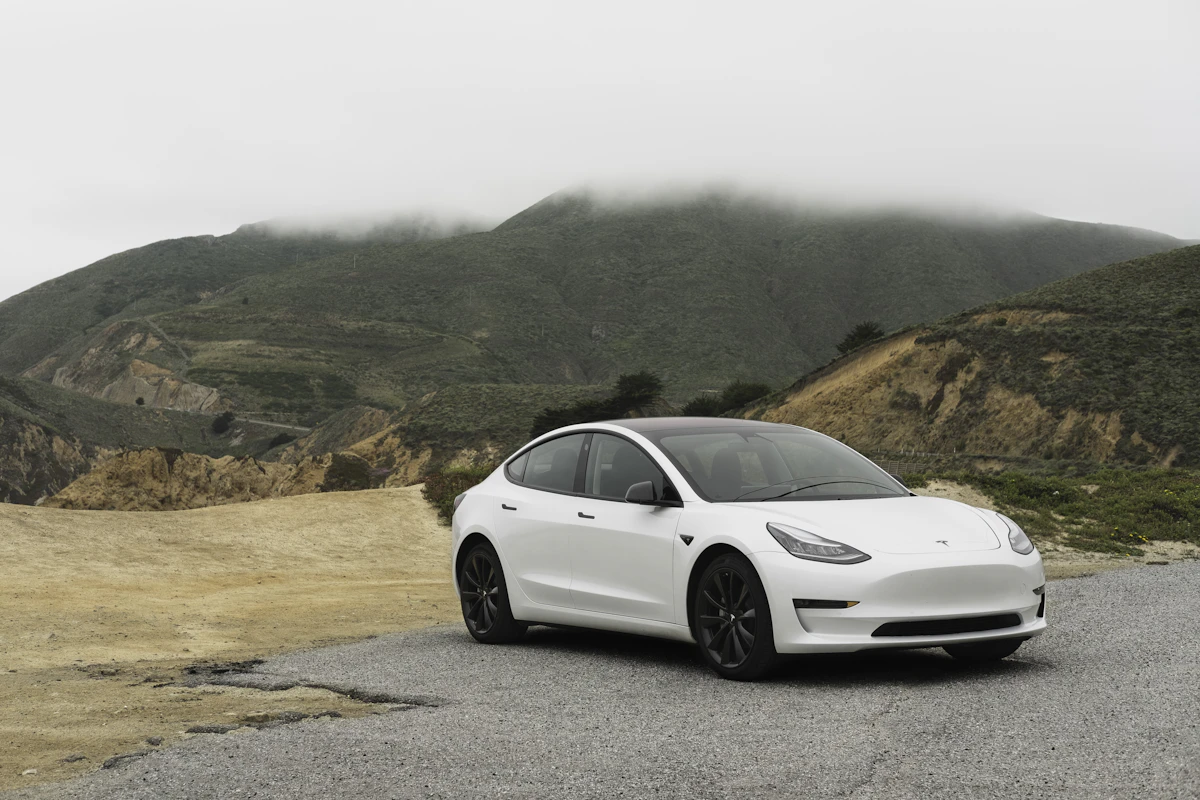
| 9 | Tesla Model 3 RWD | $38,360 | 321 mi | Max range + tech |
| 10 | Ford Mustang Mach-E Select | ~$38,995 | 250+ mi | Brand loyalty + value |
In-Depth Look: Each of the Cheapest Electric Cars 2026
1. Chevrolet Bolt EV LT — $28,995 | America's Least Expensive New EV
The reborn Chevrolet Bolt is the undisputed king of affordable electric vehicles in the United States right now. At $28,995, it delivers a solid 255 miles of EPA-estimated range using LFP (lithium iron phosphate) batteries — a chemistry that charges faster and degrades less over time than older alternatives. The crossover styling, updated interior, and modern infotainment make this feel like a $40,000 car at a much lower price. The Bolt is only in production through mid-2027, so availability is limited — act fast if this is your pick.
2. Nissan Leaf S+ — $29,990 | Best Range Under $30K
The 2026 Nissan Leaf is a full redesign. Gone is the dated hatchback — replaced by a practical electric crossover with 303 miles of range and a modern NACS fast-charging port that works at Tesla Superchargers. At just under $30,000, it is one of the strongest values in the segment. Standard features include wireless Apple CarPlay, a 28-inch driver display, and 214 horsepower. A more affordable base "S" trim is coming soon, which will push this model's entry price even lower.
3. Hyundai Kona Electric SE — $32,795 | Best City EV
The 2026 Kona Electric is trimmed to a single configuration this year, offering 200 miles of range and a standout feature list at under $33,000. The dual-screen infotainment, wireless connectivity, and dual-zone automatic climate control make it feel premium. The shorter range is a real trade-off — it is best for commuters with predictable daily driving under 100 miles. If you live in a city like Miami, Dallas, or Houston, the Kona Electric is one of the sharpest deals on the market.
4. Chevrolet Equinox EV 1LT — $36,795 | Best Long-Range SUV
The Equinox EV was InsideEVs' Breakthrough EV of the Year, and with good reason. Its base trim still delivers an impressive 319 miles of EPA-rated range — more than any competitor at this price point. The Equinox EV looks and drives like a mainstream crossover, just without the gas bill. For families who need cargo space, rear legroom, and weekend road-trip confidence, this remains one of the best rates of any EV in terms of range-per-dollar spent.
5. Volvo EX30 (2026) — ~$36,200 | Compact Luxury at an Accessible Price
For 2026, Volvo added two new trims to the EX30 lineup, including a single-motor rear-wheel-drive base model that enters at a price nearly $10,000 lower than the 2025 base. The EX30 is a compact premium SUV that packages Volvo's class-leading safety tech, a minimalist interior, and modern fast-charging into one of the smallest footprints on this list. It is ideal for urban drivers who want a step up from mainstream brands without crossing into luxury pricing.
6. Toyota bZ (2026) — ~$37,000 | Most Improved EV of the Year
Toyota completely redesigned the bZ for 2026. The previous version was criticized for sluggish charging and modest range — both are now fixed. The 2026 bZ delivers over 300 miles on top trims and significantly faster DC fast charging speeds. Toyota's reliability reputation gives this EV credibility that newer brands struggle to match. If long-term dependability matters as much as sticker price, the bZ deserves serious consideration among the cheapest electric cars 2026 has to offer.
7. Subaru Uncharted — ~$37,000 | AWD from the Start
The Subaru Uncharted is brand new for 2026. This all-electric subcompact SUV offers 308 miles of range and — unusually for this list — available all-wheel drive. The base model comes with front-wheel drive, while the AWD version costs more but adds genuine off-road traction. Early reviews praise its acceleration and capability but note some limitations in rear-seat headroom and charging speed. For buyers in snowy states or those who do occasional trail driving, the Uncharted fills a gap no other EV in this price range addresses.
8. Toyota C-HR Electric — ~$37,500 | Sporty Design, Everyday Range
The Toyota C-HR Electric brings angular, head-turning styling to a segment where most vehicles look interchangeable. It offers over 290 miles of estimated range and benefits from Toyota's proven quality track record. Some critics point to handling that could be more engaging, but no one disputes its reliability or value. If visual appeal and brand dependability rank high on your list alongside a competitive MSRP, the C-HR is a standout pick among the cheapest electric cars in 2026.
9. Tesla Model 3 RWD — $38,360 | Most Range, Best Charging Network
The Tesla Model 3 sits near the top of this price range, but its 321-mile range and native access to Tesla's massive Supercharger network justify every dollar. No other EV at this price offers the same seamless road-trip experience. Over-the-air software updates keep the Model 3 relevant year after year without a single dealership visit. For buyers who drive long distances or travel frequently, the Model 3 remains a remarkably strong value. You can also explore how electric cars compare to gas cars in long-term cost to see why range efficiency translates directly into savings over time.
10. Ford Mustang Mach-E Select — ~$38,995 | American Muscle Goes Electric
The Mach-E Select rounds out this list with a compelling blend of crossover practicality and performance-oriented styling. Ford's handling tuning gives it a driving character that most other affordable EVs lack. Range hovers around 250 miles in the base configuration — adequate for most Americans' daily needs, though behind the Equinox EV and Model 3. Ford's Blue Oval Charge Network and partnerships with third-party networks mean charging on the road is straightforward, even outside Tesla's ecosystem.
Key Benefits of Buying an Affordable EV in 2026
The financial case for going electric has never been stronger — even without the federal tax credit that expired in late 2025. Here is why the math works in your favor:
- Lower fuel costs: Charging an EV at home costs the equivalent of roughly $1.00–$1.50 per gallon in most U.S. states, compared to $3.50+ for gasoline.
- Reduced maintenance: No oil changes, fewer brake jobs (thanks to regenerative braking), and no transmission fluid. EV ownership maintenance costs are 30–40% lower on average.
- State incentives: Texas, Florida, California, and more than 30 other states still offer rebates ranging from $500 to $5,000 on qualifying EVs. Check your state's energy office.
- Higher resale stability: Well-maintained EVs from established brands (Tesla, GM, Hyundai) are holding value better than expected in 2026's used market.
- HOV lane access: Many states allow single-occupant EV drivers to use carpool lanes, cutting commute times in heavily trafficked metros like Los Angeles, Atlanta, and Dallas.
Who Can Buy a Cheap Electric Car in 2026
Almost anyone can qualify for EV ownership in 2026 — the question is which financing path makes the most sense for your credit profile. If you have good credit (700+), you will likely qualify for the lowest interest rates from major banks and credit unions, often in the 5–7% APR range for 60-month terms. Borrowers with bad credit (below 620) can still find high approval odds through specialized online lenders and dealer-financing programs — though at higher rates. There is no strict income minimum in most cases, but lenders typically want your car payment to stay under 15% of your gross monthly income.
First-time buyers, recent graduates, and even self-employed borrowers with documented income all routinely get approved. The key is knowing which top lenders to approach — and comparing at least three offers before signing. You can also review how EV tax credits worked in the USA to understand what incentives may still apply to your purchase or future upgrade.
Financing Requirements and Documents Needed
Before you walk into a dealership or apply through an online lender, gather these items. Having everything ready can mean same day approval — and sometimes instant pre-approval with no disruption to your credit score.
- Government-issued photo ID (driver's license or passport)
- Proof of income — pay stubs (last 2–3 months), tax returns (for self-employed), or bank statements
- Proof of residence — utility bill or lease agreement dated within 60 days
- Social Security Number for the credit pull
- Vehicle information — make, model, trim, VIN (once selected)
- Down payment documentation — bank statement or gift letter if applicable
- Insurance proof or willingness to bind coverage at signing
Top Lenders for Electric Car Loans in 2026
The right lender can save you thousands over the life of an EV loan. Here is how the major players stack up for 2026:
| Lender Type | Est. APR Range | Credit Req. | Approval Speed | Best For |
|---|---|---|---|---|
| Credit Unions | 4.99%–7.99% | 650+ | 1–2 business days | Lowest rates overall |
| National Banks | 5.49%–9.49% | 680+ | Same day–48 hrs | Good credit borrowers |
| Online Lenders | 6.49%–14.99% | 580+ | Instant approval | Speed + bad credit |
| Dealer Financing | 0%–12.99% | Varies | Same day | Manufacturer promos |
| Subprime Lenders | 12%–22%+ | No min. | Fast | Very bad credit / rebuild |
Pro tip: Always get pre-approved through at least one external lender (a credit union or online lender) before visiting a dealership. Dealers mark up the financing they offer — having a competing rate in hand gives you real negotiating power. The latest auto loan rates by credit score can help you benchmark what a fair offer looks like before you walk in the door.
EV Loan Rates, Terms, and What to Expect in 2026
With the Federal Reserve's prime rate sitting at 7.50% as of May 2026, auto loan rates remain elevated compared to 2020–2021 lows — but they have stabilized. Here is a realistic snapshot of what borrowers are seeing right now:
- Excellent credit (750+): Rates starting at 4.99%–5.99% APR from credit unions and top lenders
- Good credit (700–749): Rates typically 6.49%–7.99% APR, with instant approval common at most major banks
- Fair credit (650–699): Expect 8%–11% APR — still manageable with a strong down payment
- Bad credit (below 650): Options exist, including high approval programs, but rates of 12%–19%+ are common
- Typical loan terms: 36, 48, 60, or 72 months — longer terms lower your monthly payment but increase total interest paid
For regulatory transparency on how lenders must disclose rates and terms to consumers, the Consumer Financial Protection Bureau provides detailed guidance at consumerfinance.gov/auto-loans. Understanding your requirements before applying puts you in a stronger negotiating position on every deal.

Practical Tips to Get Approved Fast for an EV Loan
Getting approved quickly — and at the best possible rate — comes down to preparation and knowing where to apply. Follow these steps:
- Check your credit score first. Know your number before any lender does. Request your free annual report from the three major bureaus and dispute any errors before applying — even a 20-point score improvement can drop your interest rate by a full percentage point.
- Get pre-approved from 3 lenders. Multiple auto loan inquiries within a 14-day window count as a single hard pull under FICO scoring. Use this window to shop aggressively.
- Put money down if you can. Even 5–10% down improves your approval odds significantly and reduces your monthly payment. Zero down is still possible but typically comes with a higher rate.
- Choose a shorter loan term if you can afford it. A 48-month loan at 7% costs less in total interest than a 72-month loan at 6.5%, despite the lower monthly payment on the longer term.
- Use online lenders for speed. Several online lenders now offer decisions in minutes — not days. This is the fastest path to same day approval with a conditional offer in hand.
- Consider a co-signer. If your credit is rebuilding, a co-signer with strong credit can unlock significantly lower rates and high approval odds — even for bad credit borrowers.
Frequently Asked Questions About the Cheapest Electric Cars 2026
What is the absolute cheapest new electric car you can buy in 2026?
The Chevrolet Bolt EV LT at $28,995 MSRP is currently America's least expensive new electric vehicle. The Nissan Leaf S+ at $29,990 is a close second — and actually delivers more range (303 vs. 255 miles) for roughly $1,000 more. Both are exceptional values among the cheapest electric cars 2026 has available.
Is there still a federal tax credit on new EVs in 2026?
No. The federal Clean Vehicle Credit of up to $7,500 expired on September 30, 2025, as part of the One Big Beautiful Bill signed into law on July 4, 2025. However, the EV charger installation tax credit remains available through June 30, 2026. Many states also continue to offer their own rebates and incentives, which can be substantial. Check with your state's energy office or use IRS.gov/clean-vehicle-tax-credits for the most current federal guidance.
Can I buy a cheap electric car with bad credit?
Yes. Dealers, online lenders, and subprime auto financing programs all offer paths to EV ownership for borrowers with credit scores below 620. Expect higher interest rates (12%–22%+ APR), and plan to refinance within 12–18 months once your score improves. A larger down payment or co-signer dramatically improves both your approval odds and your rate.
Is zero down financing available on EVs?
Zero down financing is available at many dealerships, particularly for buyers with good credit scores. Some manufacturers also run promotional financing programs that include zero-down options on select trims. Keep in mind that starting with no equity increases your risk of being "upside down" on the loan if you need to sell the vehicle in the first 1–2 years.
How much does it really cost to charge an EV at home?
For most Americans, charging a mid-sized EV (like the Bolt or Nissan Leaf) overnight costs between $1.20 and $2.50 for a full charge, assuming average U.S. residential electricity rates of 12–16 cents per kWh. Over a year, home charging costs roughly $500–$750 for most drivers — compared to $1,800–$2,400 in gasoline for a typical 25 MPG vehicle at today's prices.
How do I compare EV loan offers from multiple lenders?
The most important number to compare is the Annual Percentage Rate (APR), not just the monthly payment. A lower monthly payment on a longer term often means paying thousands more in total interest. Use the total cost of the loan (principal + all interest) as your primary comparison metric. Many online lenders provide side-by-side tools that make this easy — no commitment required for a soft-pull quote.
Are affordable EVs reliable long-term?
Generally, yes — and often more so than comparable gas-powered vehicles. EVs have significantly fewer moving parts (no engine, no transmission, no exhaust system), which reduces the number of components that can fail. Models from established brands like GM, Toyota, Hyundai, and Nissan have strong warranty coverage (typically 8 years / 100,000 miles on the battery) and proven dealer service networks. The cheapest electric cars 2026 has available are built to last.
Final Thoughts: Which Cheap EV Should You Buy in 2026?
The cheapest electric cars 2026 offers are genuinely competitive with gas vehicles in real-world cost — especially when you factor in lower fuel and maintenance expenses over a 5-year ownership window. For pure budget priority, the Chevrolet Bolt EV wins outright. For the best combination of range and price, the Nissan Leaf S+ is nearly impossible to beat. For families needing a crossover with serious range, the Equinox EV delivers more miles per dollar than anything else in the segment.
No matter which model you choose, the financing step is just as important as the car itself. Locking in a low interest rate from a competitive top lender — rather than accepting the first offer at the dealership — can save you $1,500 to $3,000 over a 60-month loan. Use the tools and comparisons above to make your move with confidence.
Ready to find your rate?
Compare current auto loan rates by credit score — and see exactly what your monthly payment would look like on any EV on this list.
```