
Updated May 13, 2026 · Originally published October 14, 2025 · By

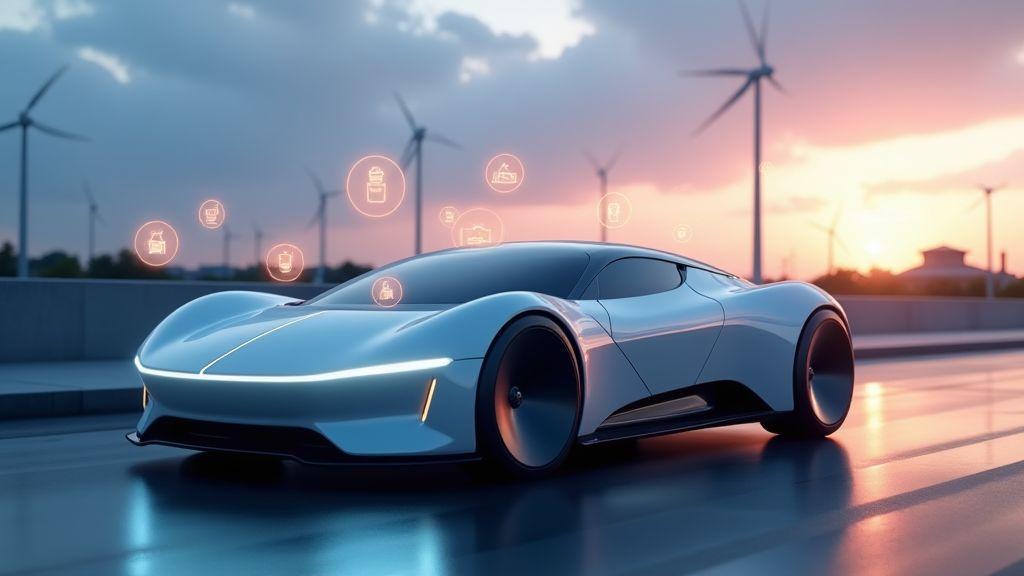
The Future of Electric Cars is no longer a distant promise for American drivers. It is becoming a practical buying decision shaped by battery breakthroughs, faster charging, smarter software, lower ownership costs, and more flexible auto financing options.
For shoppers in the United States, the next wave of electric vehicles will not be defined only by sleek design or quiet acceleration. The real change will come from innovations that make EVs easier to own, cheaper to finance, safer to drive, and more convenient for everyday families, commuters, rideshare drivers, and small business owners.
This guide breaks down seven innovations coming soon, how they work, who can benefit, what requirements lenders may review, and how to compare banks, credit unions, online lenders, and dealer financing without making the process feel like a lead-generation funnel.
The Future of Electric Cars: What Is Changing First?
The electric car market is moving from early adoption to mainstream transportation. In simple terms, an electric vehicle uses a battery pack, electric motor, power electronics, charging system, and onboard software instead of relying entirely on gasoline combustion.
According to the U.S. Department of Energy, all-electric vehicles are powered by batteries that are charged with electricity, while plug-in hybrids combine an internal combustion engine with an electric motor and rechargeable battery. For buyers, that means the ownership experience depends heavily on charging access, battery range, efficiency, and financing structure.
You can explore the federal overview of EV basics through the U.S. Department of Energy electric vehicle guide.
| Innovation | Why It Matters | Buyer Impact |
|---|---|---|
| Solid-state batteries | Higher energy density and potential safety gains | Longer range, faster charging, stronger resale value |
| Ultra-fast charging | Less waiting on road trips | EVs become easier for renters and commuters |
| Vehicle-to-grid technology | EVs can support home and grid energy needs | Potential savings and backup power value |
| AI-powered driving systems | Smarter safety and route decisions | Better efficiency and possibly lower risk |
How Electric Cars Work in Simple Terms
An electric car stores energy in a high-voltage battery. When the driver presses the accelerator, the battery sends electricity to one or more motors. Those motors create instant torque, which is why many EVs feel quick even at low speeds.
Regenerative braking captures energy when the car slows down and sends some of it back into the battery. That system can reduce brake wear and improve city-driving efficiency.
The charging system is another core piece. Level 1 charging uses a standard outlet and is slow. Level 2 charging is common at homes, apartments, workplaces, and public stations. DC fast charging is designed for quick stops on longer trips.

7 Innovations Coming Soon in Electric Cars
1. Solid-State Batteries for Longer Range
Solid-state batteries are one of the biggest reasons analysts talk about The Future of Electric Cars with confidence. Instead of using the same liquid electrolyte structure found in many lithium-ion batteries, solid-state designs use a solid electrolyte.
The potential benefits are significant: more driving range, faster charging, improved thermal stability, and smaller battery packs. For consumers, that could mean fewer charging stops and better long-term battery confidence.
Solid-state EVs may also change financing. If battery life improves, lenders may view resale value more favorably. Stronger resale value can support better loan-to-value ratios, which may help qualified borrowers access low interest offers or better rates.
2. Ultra-Fast Charging That Feels More Like Refueling
Charging speed is one of the biggest barriers for gasoline drivers considering an EV. The next generation of charging networks is focused on higher-power chargers, better battery preconditioning, improved plug standards, and more reliable payment systems.
For U.S. drivers, the goal is simple: reduce the gap between stopping for gas and stopping to charge. EV charging may not always be as fast as filling a tank, but better infrastructure can make road trips less stressful.
The EPA explains that charging a plug-in vehicle is similar to charging other electronics, with one end connected to the vehicle and the other connected to a power source or charging equipment. Read more from the EPA guide to plug-in electric vehicle charging.
3. Vehicle-to-Home and Vehicle-to-Grid Power
Future EVs may become more than transportation. With bidirectional charging, an electric car can potentially send energy back to a home, a building, or even the grid when technology, utility rules, and equipment support it.
This is important for homeowners in areas with power outages, high summer energy demand, or time-of-use electricity pricing. A parked EV with a large battery could become part of a broader household energy plan.
That extra utility may influence how buyers calculate value. A vehicle that supports backup power may justify a higher purchase price if it reduces generator needs or supports home energy resilience.

The Future of Electric Cars and Smart Software
Software will be a major part of The Future of Electric Cars. EVs already rely on software for battery management, range estimation, charging, navigation, braking, driver assistance, and over-the-air updates.
The next stage is more personalized. Your EV may learn your commute, predict charging stops, estimate battery temperature, recommend cheaper charging windows, and adjust performance based on weather and traffic.
For lenders and insurers, software can also affect risk. A car that receives safety updates, battery management improvements, and theft-prevention features may hold value better than a vehicle with outdated systems.
4. AI-Powered Safety and Driver Assistance
Advanced driver assistance systems are expected to become more common across EV price ranges. Features may include lane-centering assistance, adaptive cruise control, automatic emergency braking, blind-spot monitoring, parking support, and driver attention alerts.
These tools do not remove driver responsibility. However, they can reduce stress in traffic and may help prevent certain types of crashes when used correctly.
For shoppers comparing lenders, safety technology matters because insurance costs can affect affordability. A vehicle with expensive sensors may cost more to repair, but strong safety features may also reduce risk in specific situations.
5. Cheaper Battery Chemistry and More Affordable EVs
Battery cost is one of the biggest factors behind EV pricing. As manufacturers expand lower-cost battery chemistries, improve supply chains, and build more domestic capacity, more affordable electric cars should become available.
That matters for borrowers who need zero down options, high approval chances, or shorter loan terms. A lower sticker price reduces the amount financed, which can reduce total interest paid over the life of the loan.
Still, buyers with bad credit should be careful. A lower monthly payment can hide a high APR, long term, or negative equity risk. The CFPB recommends comparing APR, interest rate, loan length, and total amount financed, not just the monthly payment. See the CFPB auto loan comparison guidance.
6. Wireless Charging and Smarter Parking
Wireless EV charging could make ownership easier for drivers who dislike cables or have limited mobility. Instead of plugging in, the vehicle parks over a charging pad that transfers energy through electromagnetic fields.
This technology is still developing, and early systems may be more expensive than traditional Level 2 chargers. But in the future, wireless charging could appear in private garages, apartment complexes, fleet depots, and premium parking spaces.
For busy commuters, same day charging access is less important than predictable charging access. Wireless charging may turn parking time into automatic charging time, reducing the mental load of EV ownership.
7. Better EV Financing, Leasing, and Subscription Models
Financing innovation is just as important as vehicle innovation. As electric cars become mainstream, banks, credit unions, captive finance companies, and online lenders are improving how they evaluate EV buyers.
Some lenders may look more closely at battery warranty, mileage, trim level, charging access, and expected resale value. Others may offer EV-specific promotions, low interest periods, green vehicle discounts, or instant approval prequalification tools.
For comparison help, readers can also review related Meridian Pioneer resources such as electric car financing guides, auto loan pre-approval without a hard credit inquiry, and bad credit car loan approval tips.
Benefits of the Future of Electric Cars
The benefits of EV innovation go beyond saving on gasoline. The best electric cars may offer lower operating costs, fewer mechanical parts, quiet performance, instant torque, advanced safety systems, and home charging convenience.
- Lower fuel cost potential: Electricity can be cheaper than gasoline depending on local rates and charging habits.
- Less routine maintenance: EVs do not need oil changes and often have reduced brake wear due to regenerative braking.
- Better daily convenience: Home charging can reduce weekly gas station visits.
- Strong acceleration: Electric motors deliver quick torque from a stop.
- Cleaner local driving: EVs produce no tailpipe emissions during operation.
| Buyer Type | Best EV Benefit | Financing Focus |
|---|---|---|
| Daily commuter | Lower energy cost and home charging | Low interest and short term |
| Rideshare driver | Fuel savings and quiet cabin | Mileage limits and battery warranty |
| Family buyer | Safety tech and cargo space | Affordable monthly payment and insurance |
| Bad credit borrower | Lower-cost used EV options | Prequalification and total APR |
Who Can Apply for Electric Car Financing?
Most U.S. consumers can apply for EV financing if they meet basic lender requirements. Approval depends on credit profile, income, debt-to-income ratio, employment stability, down payment, vehicle price, and lender risk policy.
Prime borrowers may qualify for the best rates, promotional APRs, and flexible terms. Borrowers with fair credit or bad credit may still qualify, but the APR may be higher and the lender may request a larger down payment.
Some buyers search for no credit check or guaranteed approval offers. Be careful with those phrases. Most legitimate auto lenders review credit in some form, even if they offer soft-pull prequalification before a hard inquiry.
Requirements and Documents Needed
Requirements vary by lender, but most auto loan applications ask for similar documents. Having everything ready can improve your chances of same day review or faster conditional approval.
Common EV Loan Requirements
- Valid government-issued ID
- Social Security number or taxpayer identification information
- Proof of income, such as pay stubs, tax returns, or bank statements
- Proof of residence, such as a utility bill or lease
- Employment details or business income documentation
- Down payment source, if required
- Vehicle purchase agreement or dealer quote
- Insurance information before final funding
If you are self-employed, lenders may ask for additional bank statements, 1099 forms, profit-and-loss statements, or tax returns. If you have bad credit, a cosigner or larger down payment may improve approval odds.

Best Banks and Lenders for Electric Car Buyers
The best lender depends on your credit, location, income, vehicle choice, and whether you are buying new, used, or leased. There is no single lender that is best for every EV buyer.
Traditional banks may offer strong rates for established customers. Credit unions may offer competitive APRs and personalized underwriting. Online lenders may provide faster prequalification, broader comparison tools, and high approval options for different credit tiers.
Dealer financing can be convenient, especially when automakers offer promotional EV rates. However, convenience should not replace comparison. Buyers should still compare at least three offers before signing.
| Lender Type | Best For | Watch Out For |
|---|---|---|
| Banks | Borrowers with strong credit and existing relationships | Stricter requirements |
| Credit unions | Low interest and member-focused service | Membership rules |
| Online lenders | Fast comparisons and instant approval prechecks | Fees and final hard inquiry terms |
| Dealer financing | Manufacturer incentives and convenience | Marked-up APR or add-ons |
Comparisons That Matter Before Buying an EV
Comparing electric cars requires more than checking range. Buyers should compare ownership cost, charging speed, warranty, battery health, loan APR, insurance, home charger cost, and resale expectations.
New EV vs. Used EV
A new EV may offer the latest technology, full warranty, better range, and promotional rates. A used EV may offer a lower purchase price, lower depreciation, and better affordability for borrowers seeking high approval odds.
Lease vs. Loan
Leasing may appeal to drivers who want newer EV technology every few years. Financing may be better for buyers who drive many miles, want ownership, or plan to keep the car after the loan is paid off.
Home Charging vs. Public Charging
Home charging is usually the most convenient option for homeowners. Public charging is essential for apartment residents, long-distance drivers, and households without dedicated parking.
Rates, Interest, and Terms for EV Financing
Auto loan rates depend on market conditions, lender policy, credit score, income, debt, down payment, vehicle age, loan term, and amount financed. EVs do not automatically guarantee the best rates.
Borrowers with excellent credit may qualify for low interest offers or promotional manufacturer financing. Borrowers with fair credit may need to compare more lenders. Borrowers with bad credit should focus on total cost, not only monthly payment.
Common loan terms range from 36 to 84 months. A longer term can reduce the monthly payment, but it may increase total interest and create negative equity risk if the vehicle depreciates faster than the loan balance declines.
Practical Tips to Get Fast Approval
Fast approval is possible when your documents are ready and your application matches lender expectations. The goal is not to rush. The goal is to apply cleanly, accurately, and strategically.
- Check your credit first: Review your reports and dispute errors before applying.
- Use prequalification: Soft-pull prechecks can help compare top lenders before a hard inquiry.
- Know your budget: Include insurance, charging, taxes, registration, and maintenance.
- Prepare documents: Upload income, residence, and ID documents quickly.
- Compare terms: Choose the best total cost, not just the lowest payment.
- Consider a down payment: Even if zero down is available, money down can improve approval and reduce interest.
- Avoid unnecessary add-ons: Review warranties, service contracts, and dealer products carefully.
FAQ: The Future of Electric Cars
Is The Future of Electric Cars really affordable for average Americans?
It is becoming more affordable, but affordability depends on purchase price, incentives, loan APR, charging access, insurance, and local electricity costs. Used EVs and lower-cost battery technology may help more buyers enter the market.
Can I finance an electric car with bad credit?
Yes, some borrowers with bad credit can qualify, but the APR may be higher. A larger down payment, cosigner, stable income, and prequalification with multiple lenders may improve approval odds.
Are no credit check EV loans real?
Be cautious. Most legitimate auto lenders review credit before final approval. Some platforms offer soft-pull prequalification, which is different from a true no credit check loan.
Do electric cars qualify for instant approval?
Some online lenders and finance platforms offer instant approval decisions or fast prequalification. Final funding may still require document verification, insurance, vehicle details, and a hard credit inquiry.
Is zero down a good idea for an EV?
Zero down can help buyers preserve cash, but it may increase the loan balance, monthly payment, and negative equity risk. If possible, compare zero down with 10% or 20% down scenarios.
What is the biggest innovation coming to electric cars?
Solid-state batteries may be the biggest long-term breakthrough because they could improve range, charging speed, safety, and battery durability. However, charging infrastructure and software updates may affect buyers sooner.
Should I lease or buy an electric car?
Leasing can make sense if you want newer technology and predictable terms. Buying may be better if you drive high mileage, want long-term ownership, or plan to keep the car after the loan ends.
Which lenders are best for EV buyers?
The best lenders are usually the ones that offer transparent APRs, clear terms, competitive fees, and realistic approval requirements. Compare banks, credit unions, online lenders, and manufacturer financing before deciding.
Conclusion: Compare Before You Drive Electric
The Future of Electric Cars will be shaped by better batteries, faster charging, smarter software, bidirectional power, safer driver assistance, more affordable models, and better financing options.
For U.S. buyers, the smartest move is not simply choosing the EV with the longest advertised range. The better strategy is to compare total cost, charging convenience, battery warranty, insurance, loan terms, and lender requirements.
Before you apply, review your credit, prepare your documents, compare lenders, and calculate the real monthly cost. Continue exploring Meridian Pioneer’s EV and auto financing guides to make a confident, informed decision before signing your next electric car loan.
Suggested slug: the-future-electric-cars