Published November 23, 2026 · By
Dow futures jumped 684 points on Sunday evening, or about 1.4%, as Wall Street tried to bounce back from one of its worst weeks in more than six years. S&P 500 futures rose about 2.1% and Nasdaq-100 futures climbed nearly 2.9%, according to figures reported by Fortune shortly after 7 p.m. Eastern time on Nov. 22. The early rebound sets up a holiday-shortened trading week that follows a sharp, technology-led selloff tied to fears that the artificial intelligence boom is losing steam.
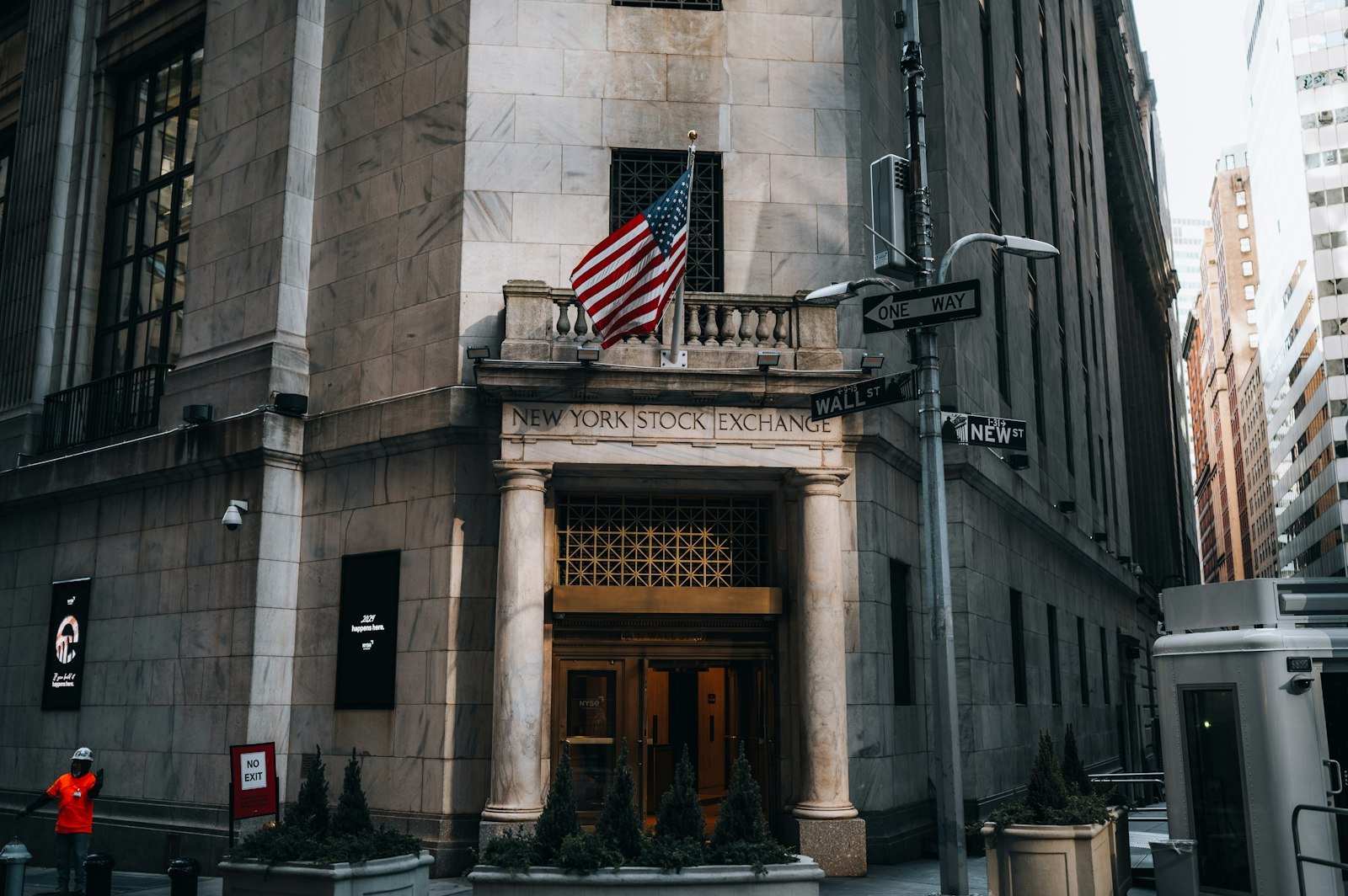
Dow Futures Rise After a Brutal Week on Wall Street
The Sunday move came after stock index futures reopened for trading at 6 p.m. Eastern time. Early in the session, the gains were smaller. Seeking Alpha reported shortly after 6 p.m. that S&P 500 futures were up 0.76% to 6,963.05 and Nasdaq-100 futures were up 1.19% to 25,325.85. Within roughly an hour, buying had picked up, and Dow futures were up 684 points, according to Fortune. Dow futures had been closed since Friday afternoon.
CNBC also reported in its live coverage that S&P 500 futures had rebounded about 2%, describing the move as a kick-start to a shortened week after a tech rout. Dow futures and other index contracts can change quickly overnight, and Sunday-evening trading volume is usually thin, so early gains do not always hold once regular trading opens on Monday morning.
How deep the losses ran
The Dow futures bounce follows heavy damage. According to Seeking Alpha, the S&P 500 fell 8.6% last week, its biggest weekly drop since the April 2025 tariff crash, and it lost ground on all five trading days. The Dow fell about 8% and the Nasdaq Composite about 10%, both their worst weeks since the pandemic selloff of March 2020.
Chip stocks took the hardest hit. The Philadelphia Semiconductor Index dropped about 17% for the week, which Seeking Alpha said was its worst stretch since the week after the Sept. 11, 2001, attacks. The S&P 500 and the Dow have now joined the Nasdaq in correction territory, the term traders use for a decline of at least 10% from a recent peak. Our earlier report on the stock market correction tracked how the slide began.
What Drove the Selloff Behind the Dow Futures Bounce
Several forces piled on at once. Fortune reported that the decline accelerated after the midterm elections, which gave Democrats wins in Congress. The outlet said many of the incoming lawmakers are more skeptical of large data-center projects, which some investors read as a risk to the spending plans behind the AI build-out.
Nvidia added to the pressure. Fortune said the scandal that led to Jensen Huang's removal as chief executive raised concerns that the company's financing deals with smaller cloud providers could unravel, leaving those firms short of money for data centers and chips. Reports that China had backdoor access to advanced U.S. AI chips have also prompted a federal push to close export-control loopholes. Separately, President Trump has said he wants to stop U.S. companies from building data centers overseas. We covered the earlier tech slide in our Nasdaq selloff report.
Different readings of the same drop
Political reactions differ. President Trump said on Sunday that stocks had lost more than $6 trillion since Democrats' midterm wins and blamed the party for the decline, as we reported in our story on the Trump market drop claim. Fortune's account listed several causes, including AI valuations, the Nvidia scandal and chip export concerns. The analysts quoted in Sunday's coverage of Dow futures focused mostly on technology and the economy rather than on politics.
Why Dow Futures Matter for Monday's Open
Dow futures are contracts that let traders bet on where the Dow Jones Industrial Average will be at a later date. Because they trade nearly around the clock, they are often used as an early signal of how the cash market might open. A strong Sunday reading for Dow futures points to a firmer start on Monday, but it is not a guarantee. Big news overnight, including from Asia and Europe, can shift the picture before the opening bell.
Dow futures can also swing more than usual when trading is light, as it often is around holidays. Fortune noted that thin volume this week could make rebounds larger than they would be in a normal week, and the same is true for declines.
The holiday trading schedule
U.S. stock markets will be closed on Thursday, Nov. 26, for Thanksgiving, and they will reopen for a shortened session on Friday, Nov. 27. That gives investors three full trading days and one half day this week. Fortune also pointed out that the seasonal "Santa Claus rally" that some traders watch for is still several weeks away.
What Economists and Strategists Are Saying
Mark Zandi, chief economist at Moody's Analytics, wrote on social media that consumer spending tends to move about 2 cents for every $1 change in household wealth over roughly a year. By his estimate, if stock prices stay at current levels, the lost wealth would subtract almost 0.3 percentage point from real economic growth a year from now, after markets added about 0.7 point this quarter. He also noted, "We've seen AI stocks selloff before, only for them to rebound quickly."
Several large banks remain upbeat on the longer term, according to Fortune. Morgan Stanley and Goldman Sachs see the S&P 500 at 8,700 by the end of 2027, while UBS Global Wealth Management and Wells Fargo have targets of 8,200. Steve Chiavarone of Federated Hermes has a 10,000 target and called fears about the midterms and data-center risk overblown. These are forecasts, not certainties, and Wall Street targets are often revised.
Analysis: what to watch next
In our analysis, three things are likely to shape whether Sunday's bounce lasts: news on Nvidia's leadership and its financing deals, any federal action on chip exports, and signals from the Federal Reserve on interest rates. Each has moved markets in recent weeks, and any surprise could change the tone of Dow futures quickly during a quiet holiday week.
What It Means for You
For most Americans, a weekly drop of this size shows up first in retirement accounts. Many 401(k) plans and IRAs hold broad index funds that track the S&P 500, so last week's losses likely lowered balances on recent statements. A one-night bounce in Dow futures does not erase those losses, but it is a reminder that markets can move sharply in both directions.
- Check your mix, not just your balance. If tech stocks have grown into a large share of your portfolio, the past week showed how quickly that concentration can cut both ways.
- Avoid decisions based on one night of trading. Dow futures can reverse by the morning, especially when volume is thin around a holiday.
- Know your timeline. Money you need within a year or two is more exposed to swings like these than long-term retirement savings.
- Watch for scams. Volatile weeks often bring pitches promising quick recovery gains. The SEC's Investor.gov site offers free tools to check a broker or adviser.
Beyond portfolios, Zandi's estimate suggests that a lasting market decline could slow consumer spending modestly next year as households feel less wealthy. For now, the holiday shopping season starts this week with Black Friday, and retailers will be watching whether the market turmoil affects how much shoppers spend.
This article is for information only and is not financial advice.
Sources: Fortune (Nov. 22, 2026); Seeking Alpha (Nov. 22, 2026); CNBC live coverage (Nov. 22, 2026); U.S. Securities and Exchange Commission, Investor.gov.