Published November 13, 2026 · By
Samuel Alito, a Supreme Court justice since 2006, warned on Thursday night that Congress has the power to "turn off the lights" at the nation's highest court by cutting off its funding. The remarks, delivered to a large audience of conservative lawyers in Washington, came about a week after Democrats won control of both the House and the Senate in the midterm elections, and they quickly became one of the most searched political topics in the United States on Friday.
What Samuel Alito Said at the Federalist Society Dinner
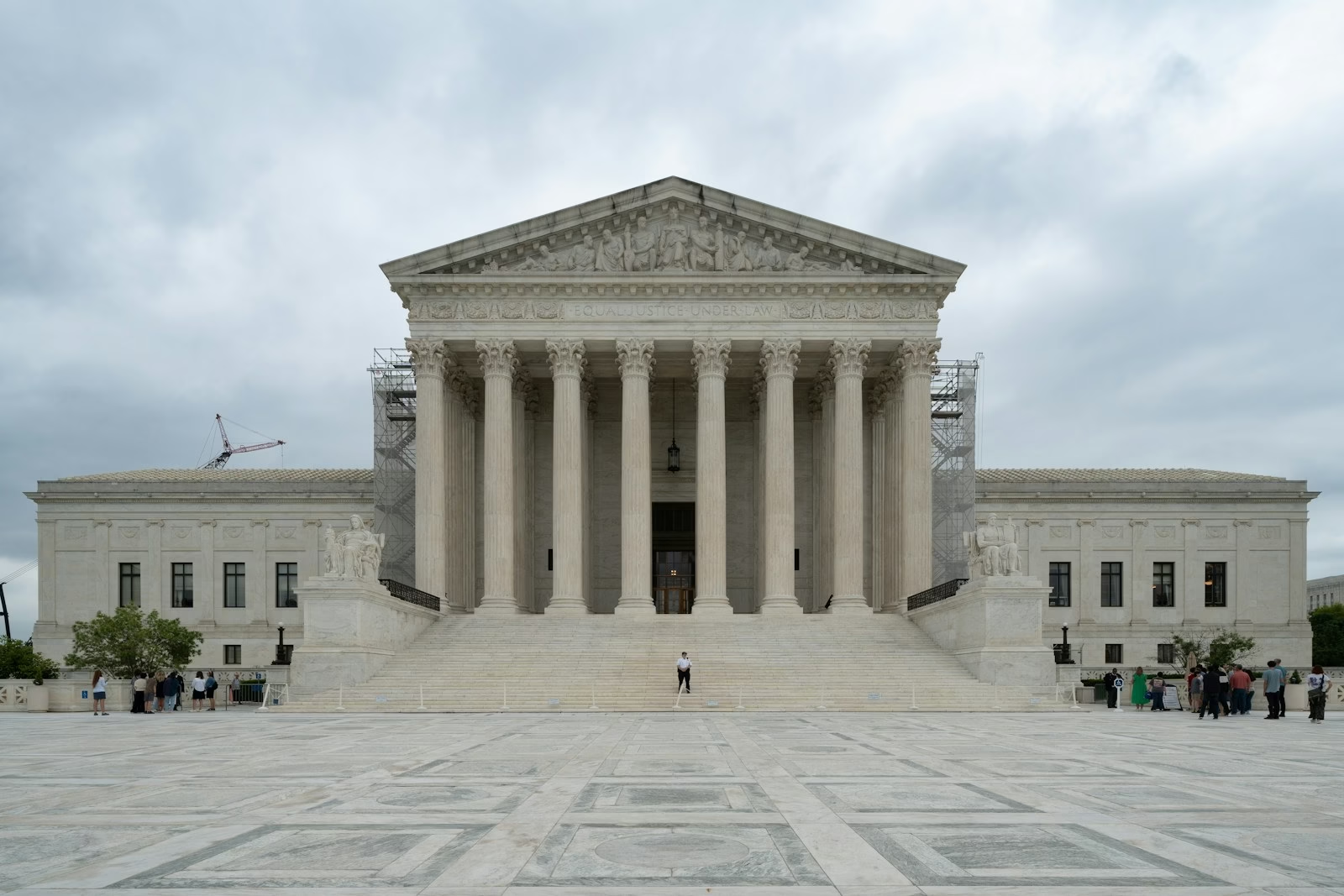
Justice Samuel Alito spoke on Thursday, November 12, at the Antonin Scalia Memorial Dinner, a centerpiece of the Federalist Society's annual national convention. According to The Hill, more than 1,000 conservative lawyers attended. The Federalist Society does not officially take positions on legal or political questions, but it has long served as a pipeline for judicial nominees chosen by Republican presidents.
In his speech, Samuel Alito described the judiciary as the least powerful of the three branches of government and said it is vulnerable to pressure from both Congress and the executive branch. "Congress can turn off the lights at the Supreme Court and stop everything from happening if they want to defund their activities," he said, as reported by The Hill. He added that lawmakers have many other tools they could use, or at least attempt to use, against the courts.
The justice said that preserving the independence of the judiciary is essential. If that independence were removed, he argued, the Constitution adopted in 1789 would no longer function as it was designed. He also acknowledged that judges can overstep.
Samuel Alito on Lower-Court Judges
Samuel Alito also turned to the federal district courts, where judges have issued a large number of orders blocking executive actions in recent years. He described lower-court judges as dedicated and skillful but not perfect, and said they make mistakes. According to Fox News Digital, which credited The Hill for the remarks, he said that in some instances judges have "gone far astray" in abusing their powers, including through what he called unjustified orders blocking presidential policies.
What He Did Not Mention
Both The Hill and HuffPost reported that Samuel Alito did not refer directly to the midterm results, the incoming Democratic majorities in Congress or any specific legislation. HuffPost also noted that he did not address President Trump's past public criticism of federal judges.
Why the Samuel Alito Remarks Drew Attention Now
The timing explains much of the interest in what Samuel Alito said. Democrats swept both chambers of Congress in the November 3 midterm elections, and Newsweek reported that the party will hold at least 54 Senate seats in January. The new 120th Congress will control federal spending, including the annual budget for the judiciary, starting next year. President Trump, a Republican, keeps his veto power over any spending bill or court-related legislation.
Samuel Alito, 76, was nominated by President George W. Bush and joined the Court in early 2006. In recent weeks, some legal experts have speculated that he might retire while Republicans still control the Senate during the lame-duck session. In a Fox News interview cited by Newsweek, Samuel Alito said he has been bemused by that speculation and indicated he has no set plan for when he might step down.
Public trust in the Court is also part of the backdrop. A Gallup poll in September found the Supreme Court's approval rating at 34%, the lowest recorded at the start of a term, according to Newsweek.
Samuel Alito and How Congress Controls Court Funding
The Constitution gives Congress the "power of the purse," meaning lawmakers decide how much money every federal institution receives, including the courts. However, Article III of the Constitution states that federal judges are to receive compensation that cannot be reduced while they remain in office. Fox News Digital noted this distinction: Congress could target the Court's operating funds, but not the justices' salaries.
In practice, the Supreme Court's budget pays for its staff, building operations, technology and its own police force. The Court submits a budget request each year, and it is reviewed by the House and Senate Appropriations Committees as part of the Financial Services and General Government spending bill. Like other agencies, the judiciary is affected when Congress fails to pass spending bills on time.
The July Request for More Security Money
Funding for the Court has already been on the agenda this year. On July 14, Justices Elena Kagan and Amy Coney Barrett testified before a House Appropriations subcommittee, the first time justices had appeared before Congress since 2019, according to Scripps News. The Court asked for more than $20 million in additional security funding, including $14.6 million to give each justice six more security agents and about $2 million for added Supreme Court police officers and an off-site security post.
The justices described rising threats against judges and their families, a concern Samuel Alito echoed when he called the courts vulnerable. Scripps reported that Barrett had recently been targeted in a "swatting" incident at her home.
What Democrats and Republicans Have Proposed
As of Friday, the coverage reviewed for this article did not include direct responses to the Samuel Alito speech from congressional leaders of either party. Lawmakers on both sides, however, have already put forward competing ideas about the Court's future, as reported by TIME in September.
Democratic Proposals
- Term limits: Sen. Sheldon Whitehouse of Rhode Island and other Democrats reintroduced a bill (S. 5076) in July that would set 18-year active terms for justices.
- Ethics rules: Sen. Chris Murphy of Connecticut introduced a bill (S. 5121) calling for a binding code of conduct, an ethics investigations counsel and public explanations of recusals.
- Court size: Rep. Al Green of Texas filed H.R. 8647 in May to expand the Court to 13 justices, an idea Rep. James Clyburn of South Carolina also voiced support for in August.
- Emergency orders: Rep. Jamie Raskin of Maryland proposed H.R. 8991, which would require written legal reasoning for certain emergency rulings.
Republican Position
Republicans have argued against adding seats to the Court, describing such plans as "court packing." In September, the House voted 212-206 on a constitutional amendment from Rep. Andy Biggs of Arizona that would permanently fix the Court at nine justices. The measure won a narrow majority but fell short of the two-thirds required for a constitutional amendment. Raskin called the amendment a partisan power grab at the time.
Legal experts quoted by Newsweek before the Samuel Alito speech said that even with larger majorities, Democrats will not have enough votes to override a presidential veto. Stephen Wermiel of American University said Democrats might still pursue term limits or a stricter ethics code. Professor Paul Collins said Senate Democrats could weigh reform but that Trump would likely veto it.
What the Samuel Alito Warning Means for You
For most Americans, the justice's warning will not change anything immediately. No bill to cut the Supreme Court's funding has been introduced, and the new Congress does not take office until January. Still, the debate could affect how quickly and how predictably federal courts handle cases that touch everyday life, from tariffs and taxes to benefits and voting rules.
Court Funding and Shutdown Fights
The judiciary depends on the same appropriations process as the rest of the government. That means a broader budget standoff, such as the current government shutdown risk tied to the December 11 deadline, can eventually reach the courts as well. If you have a pending federal case, a bankruptcy filing or an immigration matter, it is worth following funding news and checking court notices.
Rulings That Affect Your Wallet
Supreme Court decisions shape policies on tariffs, federal benefits, student loans, health care and the powers of federal agencies. You can track the Court's calendar and decisions directly on the official supremecourt.gov website. Changes in Senate leadership, covered in our report on the fight over Chuck Schumer's leadership, will also influence which court proposals reach a vote.
Analysis: What to Watch Next
Our analysis: three developments are worth watching. First, whether Congress responds to Samuel Alito's warning in the next spending deal, including the Court's security funding request. Second, whether the incoming Democratic majorities schedule hearings on term limits or ethics rules. Third, how the White House responds to any court-related legislation. If you want to make your views known, you can contact your senators and representative, who will vote on these spending and reform bills.
This article is for information only and is not financial or legal advice.
Sources: The Hill (Zach Schonfeld, November 13, 2026); HuffPost (November 13, 2026); Fox News Digital (November 13, 2026); Newsweek (November 4, 2026); TIME (September 3, 2026); Scripps News (July 14, 2026); Constitution Annotated, constitution.congress.gov.