Published November 14, 2026 · By
Sean Duffy asked Congress on Friday night for $50 billion in emergency money to rebuild the nation’s air traffic control system, hours after a communications failure forced the first nationwide ground stop since 2023. Speaking at a White House news conference, the Transportation secretary blamed aging switches and routers that he said became overloaded with data, and he described the request as bipartisan.
The new figure is larger than the roughly $30 billion the White House had sought days earlier. Below is what Sean Duffy said, how Democrats responded, what remains unclear and what the episode could mean for travelers heading into Thanksgiving.
What Sean Duffy Said Caused the Ground Stop
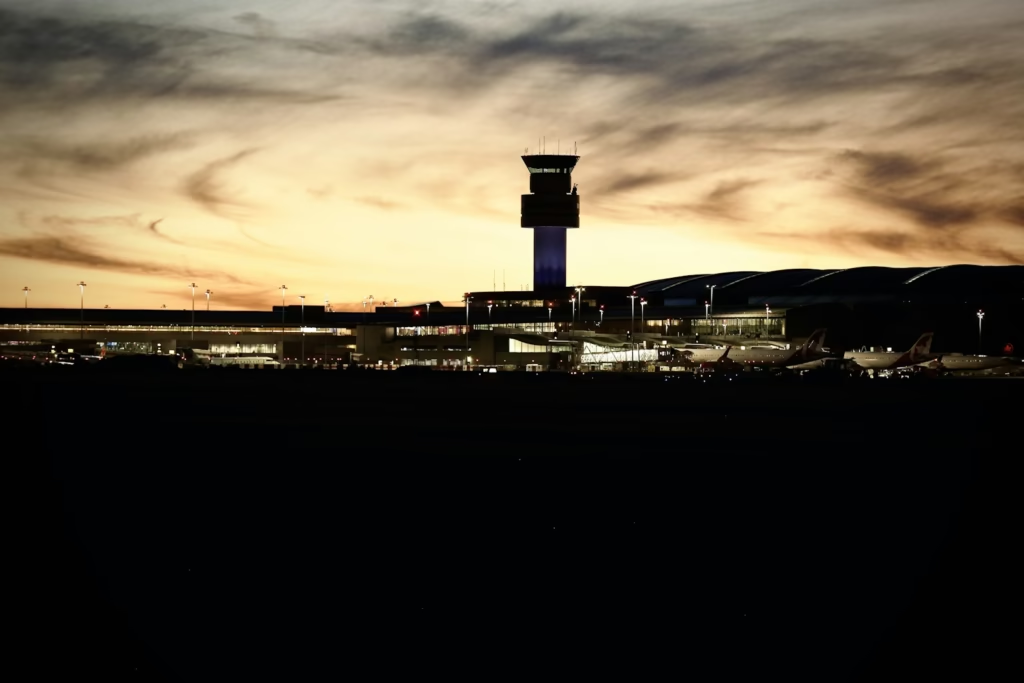
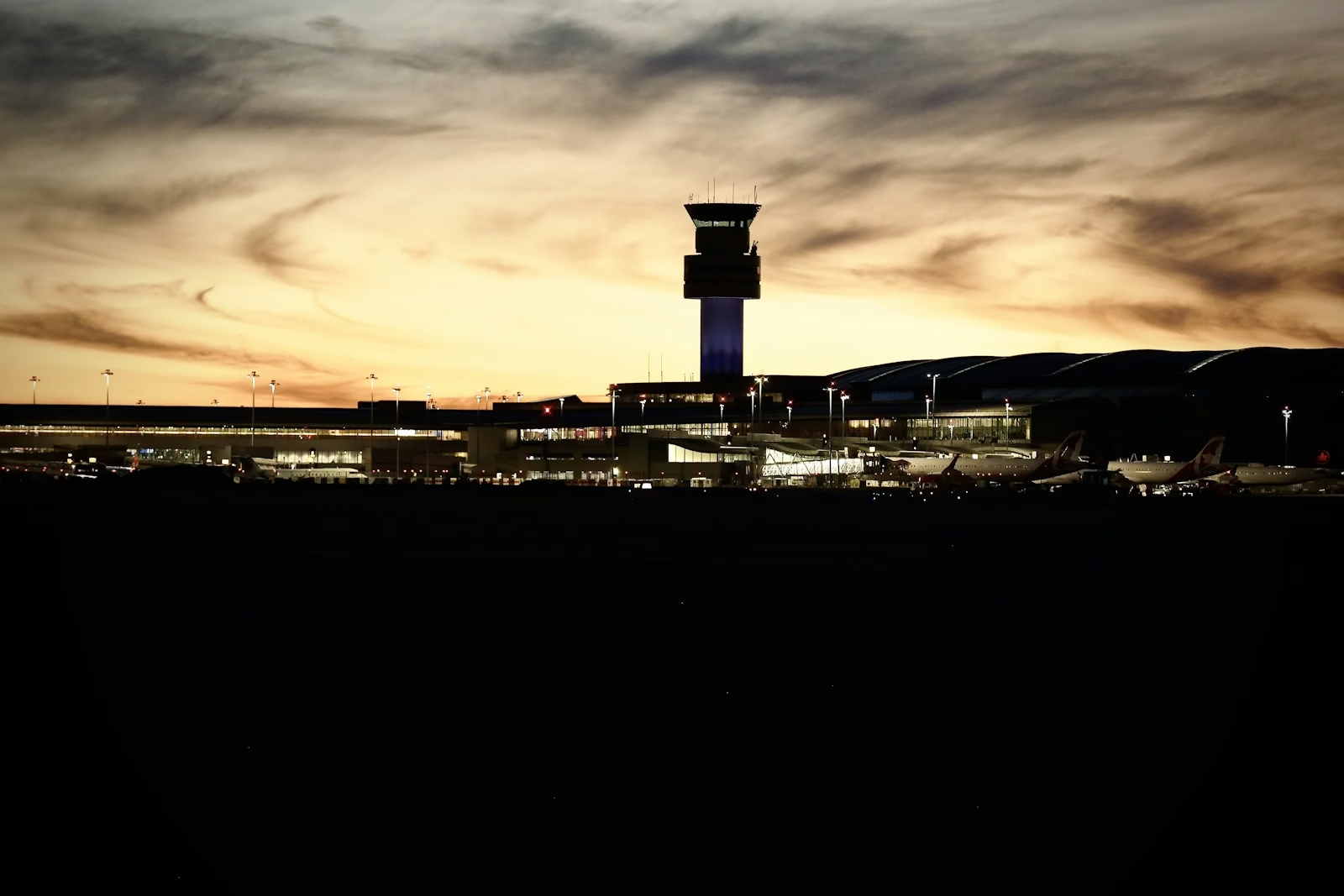
According to Fox Business, Sean Duffy told reporters that instability in Federal Aviation Administration radar and communications systems began at about 3:36 p.m. Eastern time on Friday, November 13. He said outdated switches and routers became overloaded with data and started giving controllers inconsistent information, which led the FAA to hold departures at every U.S. airport.
Sean Duffy described much of the network as old analog equipment. He referred to the system’s copper lines as dating to the 1980s and said it relies on time-division multiplexing, or TDM, an older telecom technology, according to The Express, whose report was syndicated by AOL. He also said that newer equipment installed under the current administration did not fail.
No sign of a cyberattack, officials said
Homeland Security Secretary Markwayne Mullin called the problem a telecommunications outage and said there was no indication of a malicious attack, ABC News reported. In a later update carried by ABC13 Houston, Mullin said the outage appeared to be mechanical, while cautioning that nothing was completely certain yet. Federal officials are still investigating the technology failure, according to The Express.
How long the halt lasted
Reported end times differ slightly. Fox Business said the FAA reopened airspace at about 8:15 p.m. Eastern time, while ABC13 and The Express placed it closer to 8:30 p.m. Either way, the disruption lasted a little more than four hours. ABC News reported that more than 4,000 flights had been canceled. Knock-on effects could linger as airlines reposition crews and aircraft, though that is Meridian Pioneer’s analysis, not an official forecast. Our earlier report on the FAA ground stop covers the first hours of the outage.
Sean Duffy’s $50 Billion Request to Congress
Sean Duffy asked lawmakers for $50 billion in what he called emergency funding to replace aging hardware, telecommunications equipment and control towers. “This is an emergency,” he said, according to Fox Business. He also called the issue bipartisan and “an American issue,” the outlet reported, and warned that without a complete overhaul the system would keep failing.
The Express reported that Sean Duffy noted President Trump had asked Congress for $30 billion before saying he wanted $50 billion. Earlier this week the White House and the Department of Transportation sent lawmakers a request for an additional $30.1 billion in air traffic control funding, so Friday’s figure would raise that ask by about $20 billion.
Money already approved
Sean Duffy said the administration had already secured $12.5 billion toward modernization, according to Fox Business. Part of that work is a contract of nearly $5 billion with Rohde & Schwarz, announced in April, to replace up to 462 voice switches; more than 40 have been installed so far, the outlet reported.
Sean Duffy also criticized earlier efforts. TheWrap reported that he said previous administrations received about $15 billion for the FAA over 25 years and that little was accomplished with it.
Timeline in Congress
Sean Duffy said he plans to meet with lawmakers the week after Thanksgiving, The Express reported. He said he expects the system to be back up and running for the busy holiday travel period. The outlet noted it was unclear whether Congress would move forward with the larger request. Any new money would have to pass both chambers, where spending talks are already tied up with a December 11 funding deadline.
How Democrats and Others Responded to Sean Duffy
Sean Duffy’s predecessor, former Transportation Secretary Pete Buttigieg, who served under President Biden, pushed back on suggestions from the Trump administration that his department was to blame for the aging system. Speaking in Denver at a Democratic post-midterm conference, Buttigieg said his department did a lot to upgrade the system and called for clearer answers, according to TheWrap.
“When we had an outage, I didn’t stand there complaining about the Trump administration,” Buttigieg said, TheWrap reported. The Daily Beast reported that he said he had no inside knowledge of the cause and questioned why backup systems did not prevent an outage of this size.
Lawmakers and airlines
Formal statements from congressional leaders of either party on the $50 billion figure had not been widely reported by early Saturday in the coverage Meridian Pioneer reviewed. Airlines focused on rebooking. ABC News reported that Delta waived change fees for travelers rebooking Friday and Saturday flights, and United waived change fees and fare differences for trips scheduled from November 12 through November 20.
What Sean Duffy’s Plan Means for You
For most travelers, the immediate question is not the $50 billion debate Sean Duffy started but the next few weeks of flying. Thanksgiving is one of the busiest travel periods of the year, and Friday showed how a single technical failure can ground flights across the country within minutes.
Your refund rights
Under Department of Transportation airline refund rules, you are owed a cash refund if your airline cancels or significantly changes your flight and you decide not to travel. A significant change includes a delay of three hours or more on domestic flights or six hours or more on international flights. The rule applies whatever the cause, including an air traffic control outage.
Refunds must go back to your original form of payment, within seven business days for credit cards and 20 calendar days for other methods. You do not have to accept a voucher. Meal and hotel coverage, however, depends on each airline’s own policy and often excludes delays the carrier does not control.
Practical steps before Thanksgiving
- Check your flight in the airline app and on the FAA’s National Airspace System Status page before leaving home.
- Book morning flights and nonstop routes when possible, since early departures are less exposed to cascading delays.
- Save receipts, boarding passes and delay notices in case you need to request a refund or dispute a charge.
- Watch for airline travel waivers, which can let you change dates without a fee during disruptions.
The taxpayer angle
Meridian Pioneer analysis: the request is large in absolute terms but small relative to total federal spending. Whether Congress funds it, and how, will shape both the pace of upgrades and the federal deficit. Supporters of new spending point to Friday’s outage as evidence of urgency, while budget watchers in both parties typically ask how large requests will be paid for and overseen. Neither side has published a detailed cost breakdown of the $50 billion so far.
What to Watch Next
Key open questions include the findings of the federal investigation into what failed, whether the FAA adds new safeguards before Thanksgiving, and how lawmakers from both parties respond when Sean Duffy brings his request to Capitol Hill after the holiday. Congressional appropriators would also need to decide whether the money comes as emergency spending or through regular budget bills.
For now, the FAA has reopened the airspace and airlines are working through the backlog. Travelers may still see some residual delays over the weekend as schedules return to normal.
This article is for information only and is not financial or legal advice.
Sources: Fox Business; ABC News; ABC13 Houston; TheWrap; The Express (via AOL); The Daily Beast (via Yahoo News); U.S. Department of Transportation (transportation.gov); Federal Aviation Administration (nasstatus.faa.gov).