
Published October 15, 2026 · By

Quick answer: Before financing a used electric car, assess used EV battery health, remaining warranty, charging compatibility, title history and total ownership cost—not just the advertised price and monthly payment. Electric-vehicle batteries can lose usable capacity over time, and the condition of an individual car cannot reliably be determined from mileage alone. Ask for a model-appropriate battery diagnostic and independent inspection, verify warranty eligibility directly with the manufacturer, and confirm that charging works where you live. The U.S. Department of Energy Alternative Fuels Data Center explains that battery life depends on vehicle design and conditions, and that replacement outside coverage may be expensive.
Used EVs can offer attractive transportation economics for drivers with convenient charging and predictable routes. But a lower purchase price does not eliminate the risk of degraded range, expensive tires, insurance premiums or an out-of-warranty high-voltage component. The financing decision is inseparable from vehicle condition: borrowing over five or six years on a vehicle you cannot confidently assess can turn an apparent bargain into negative equity and high repair costs. This guide gives buyers a realistic inspection and borrowing framework without claiming current incentives or universal battery warranty coverage.
Research note: Prepared October 15, 2026. Specific battery warranties, tax incentives, pricing and diagnostic tools vary by model, VIN, location and law. Examples are illustrative and not live lender quotations.
Used EV battery health: why it matters
A conventional used-car inspection focuses heavily on engine, transmission, oil leaks and mechanical wear. Battery-electric cars have different high-cost components. The traction battery stores energy for propulsion and can gradually lose capacity, while its usable range also depends on temperature, driving speed, tires and vehicle settings. A car might appear affordable because of depreciation, but a buyer needs to understand whether it can reliably serve daily routes for several more years. The DOE notes that many manufacturers offer lengthy battery warranties, but the actual term and conditions must be confirmed for the exact vehicle.
Compare battery-related risk with the anticipated financing term. If the loan continues well beyond the relevant warranty coverage, consider how you would pay for a substantial repair. Not every battery requires replacement as it ages, and repair costs vary significantly by model. Avoid sensational claims that all EV batteries fail at a specific mileage or that every battery is guaranteed to last the life of the car.
Used EV battery health vs estimated driving range
The range estimate shown on an EV's dashboard is useful but not a standardized measurement of battery capacity. It can incorporate recent driving patterns, climate-control use, weather and software assumptions. A 100% indicated charge does not prove the battery holds its original energy capacity. Some manufacturers offer a built-in battery health feature, service diagnostic report or specialized evaluation, while independent EV technicians may have model-specific tools. Ask for a diagnostic describing what was measured, the test method, date and any limitations.
Compare the report with the manufacturer's original specifications for the exact year and trim, recognizing that rated range is a standardized laboratory estimate, not a promise of real-world performance. A road test with several charging conditions can reveal practical issues, but it should not replace a technical inspection. Consider the cost of obtaining credible data before committing to a large loan secured by a car with uncertain battery condition.
Check the remaining EV battery warranty by VIN
An advertisement may say 'battery warranty included,' but the buyer needs to know which components are covered, when the warranty began, the mileage cap, capacity-retention threshold, exclusions and whether the coverage transfers to a subsequent owner. The DOE notes that many manufacturers offer approximately eight-year or 100,000-mile battery warranties, while some products or jurisdictions differ. That statement is descriptive, not a guarantee for every EV. Ask the manufacturer's authorized representative to verify the specific VIN and any remaining coverage in writing.
Understand whether the warranty protects against outright battery failure, excessive capacity degradation or both, and what diagnostic test would trigger a claim. Repairs may be subject to approved service locations, required documentation and other conditions. If the warranty is close to expiring, include the resulting financial risk in your negotiation and reserve calculation. A dealer's verbal assurance should not be the only evidence you rely on.
Test EV charging before buying
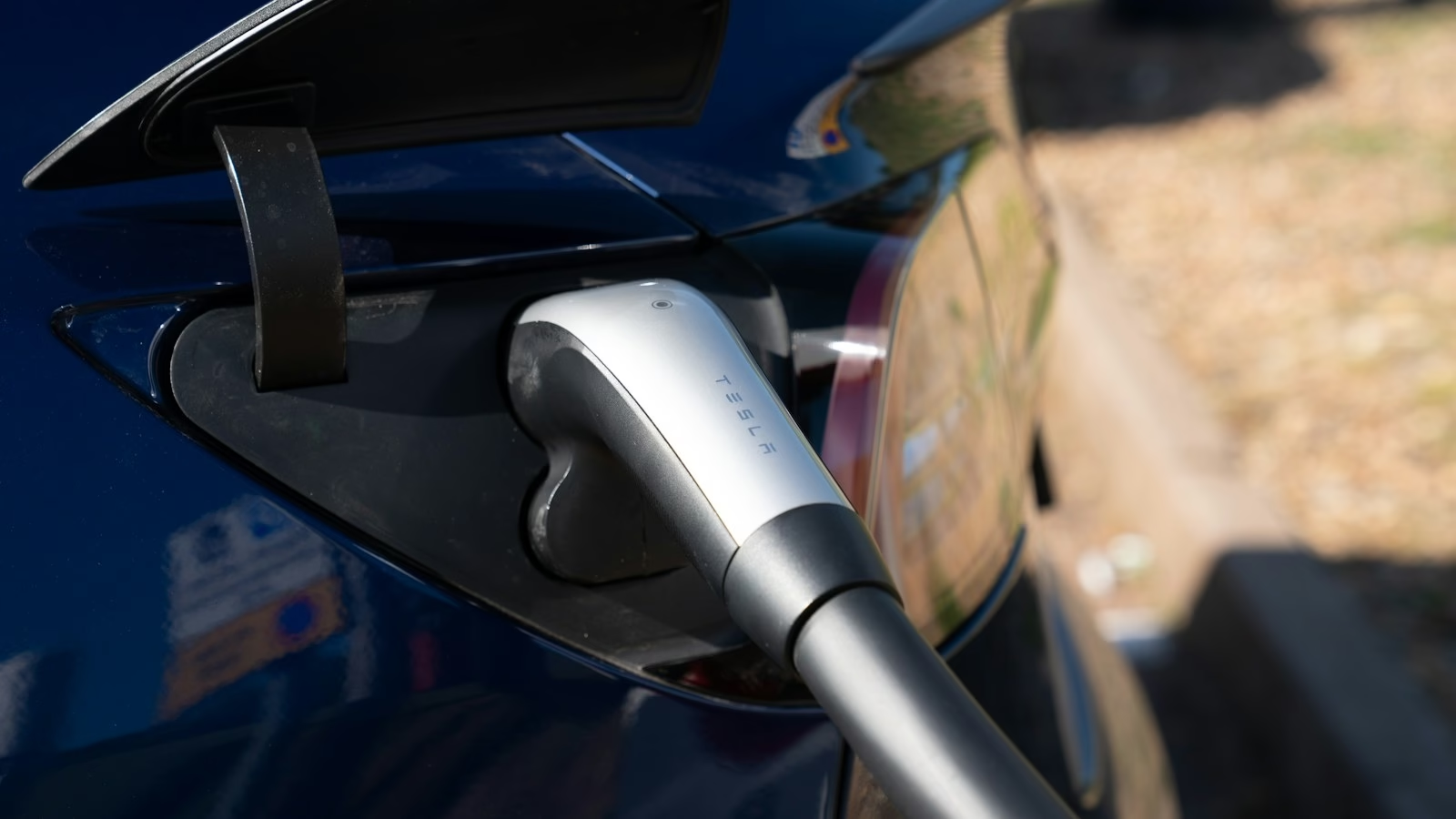
Charging needs differ greatly among EV models. Confirm the connector type, onboard charging hardware, DC fast charging capability and current compatibility with local networks or approved adapters. Ask whether the mobile charging cable and other promised equipment are included with the vehicle, and test them when practical. A listing that says 'fast charging' does not tell you how quickly the battery actually charges under realistic conditions or whether the charger near your home supports that car without special equipment.
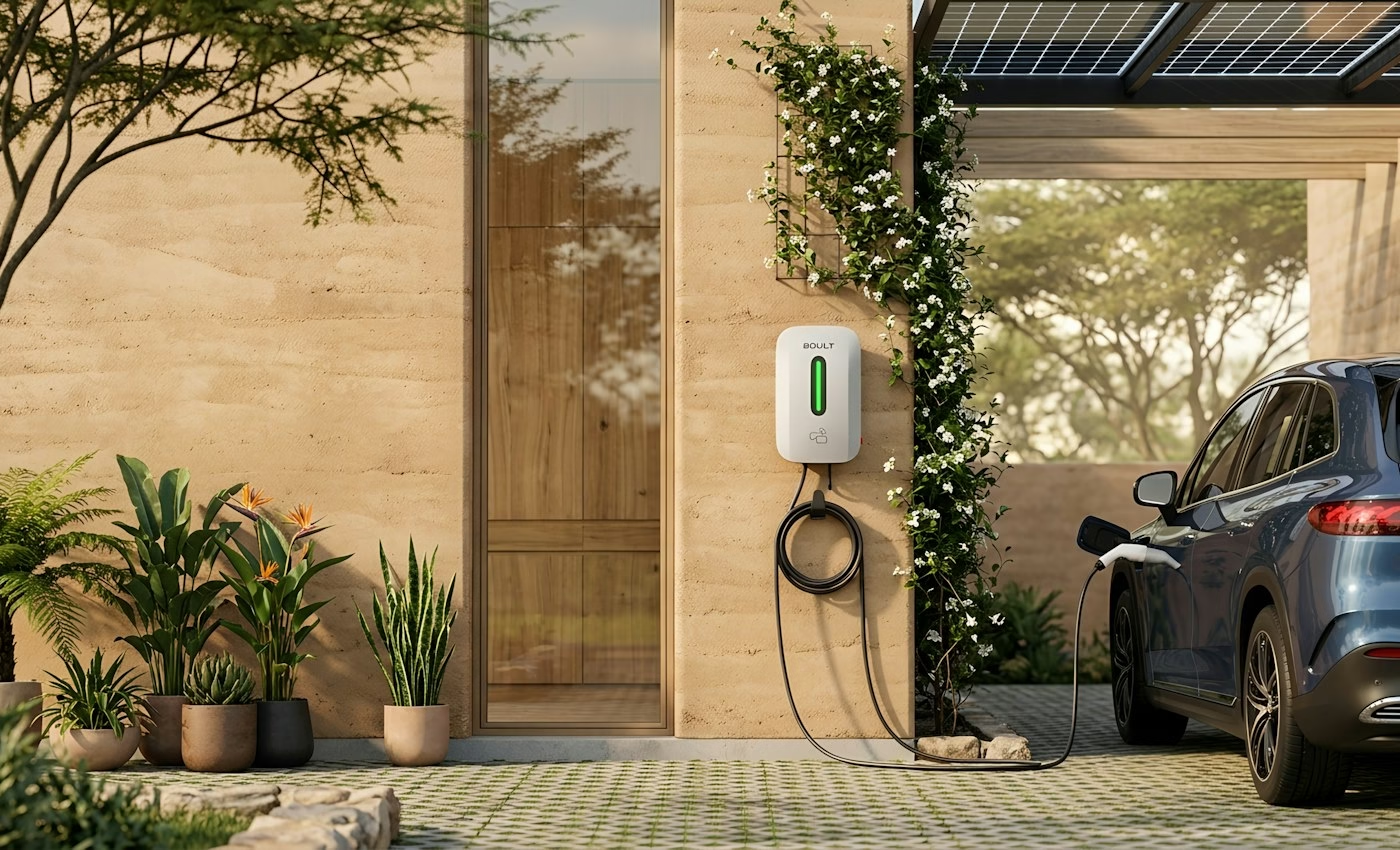
Research daily commuting and occasional long trips using reliable charging locations. An apartment resident without dependable charging may face a very different ownership cost from a homeowner who can safely charge overnight at an appropriate outlet. Account for installation costs, utility tariffs, charging subscriptions and time spent charging. The DOE consumer EV resource describes why charging availability and trip planning matter.
Used EV purchase checklist: inspect more than the battery
- Obtain the VIN and verify the title and ownership history.
- Check battery health using credible model-specific diagnostics where available.
- Ask the manufacturer about remaining battery and powertrain coverage.
- Test AC and DC charging where safe and supported.
- Inspect tire wear, suspension, brakes, body damage and underbody protection.
- Check safety recalls and whether required remedies were completed.
- Confirm software, keys, app access and account transfer requirements.
- Estimate insurance, charging and likely repair costs before seeking final financing.
The FTC recommends independent vehicle inspections because history reports do not reveal every mechanical issue. A used EV merits an inspector with relevant high-voltage training and access to appropriate diagnostic methods. Do not attempt to open or repair a high-voltage battery yourself.
Vehicle history, flood damage and title problems
A used electric car with a salvage history or flood-related damage can raise significant questions about value, safety, insurability and financing eligibility. Obtain a reputable history report and verify title status through official state channels. No report is complete, so ask an independent technician to evaluate signs of structural repair, water intrusion or electrical issues. A car described as 'certified' by a dealer is not a substitute for reviewing which inspection was performed and what warranty actually accompanies the sale.
The FTC's Used Car Buyers Guide is a valuable starting point for dealership purchases because it indicates warranty information and encourages independent inspections. Ask to see the guide and retain a copy. In certain jurisdictions different required versions apply. Confirm that all promised repairs and included accessories appear in signed purchase documents, not merely in sales messages.
How to compare a used EV loan with a gasoline alternative
Start with the out-the-door price for each vehicle, including taxes, title, mandatory dealer fees and any add-ons you actually choose. Then estimate annual miles, realistic charging or fuel costs, insurance premiums, maintenance, tires and expected depreciation over the years you plan to own the car. Do not assume fuel savings automatically offset a higher purchase price or financing APR. A long highway commute with expensive public fast charging may produce very different economics than city driving with low-cost home charging.
Use the same ownership period and financing assumptions for both vehicles. Include sale value or remaining loan balance at the end of the comparison. A used EV can have lower routine maintenance for some components, but a battery or charging system repair outside warranty may be expensive. The point is to model risks, not to conclude that an electric vehicle is automatically the cheapest or most expensive option.
Illustrative monthly financing example
Consider a hypothetical used EV with a financed amount of $22,000, 60 monthly payments and a fixed 9% nominal annual interest rate with standard amortization. Its approximate monthly principal-and-interest payment is $457, before insurance, charging, registration and repairs. This example is not an available offer or prediction for 2026. A borrower paying more upfront would finance less; a longer term might lower the monthly figure but increase total interest. Ask the lender for its actual APR and total-of-payments disclosure because fees and borrower qualifications can change the result.
Now imagine the borrower drives 12,000 miles annually. If the car consumes 0.30 kilowatt-hour per mile, it would require around 3,600 kWh for driving before charging losses, weather-related variation and auxiliary loads. Multiply your realistic all-in electricity price by expected purchased energy and compare the result with gasoline costs for a similar alternative. These hypothetical figures show a calculation method, not standardized efficiency for a specific EV.
Why a longer EV loan can increase negative-equity risk
A vehicle is an asset that generally depreciates with use, age and market conditions. A long loan term can leave the borrower owing more than the car's resale value if prices decline quickly or the vehicle is damaged. Used EV values may be influenced by new battery technology, incentives, charging standards, manufacturer pricing and consumer preferences. Avoid predicting resale values using a recent price decline as if it will repeat. The useful test is whether you could handle a sale or insurance total-loss event while the loan balance remains high.
Before accepting 72 months or more, compare the total interest and remaining principal after the planned ownership period with a shorter term you can afford. If the vehicle is already older, check whether the financing outlasts battery warranty protection. Our auto loan term comparison explains why a lower payment does not necessarily mean lower cost.
Insurance and repair costs deserve independent quotes
Get an insurance quote for the exact VIN, location, drivers and intended coverage before purchasing. Repairability, parts availability, vehicle value, driver history and local claim costs can influence premiums. A generic claim that all EVs cost more to insure would overlook model-specific differences. Also ask about the availability of qualified repair facilities and the practical time required for major replacement parts. Downtime has a cost when a car is needed for work or family commitments.
A shopper should consider whether a deductible could be paid without a high-rate credit card, and whether comprehensive or collision insurance is required by the lender. Optional gap coverage might be relevant if the financed amount is high relative to expected value, but read the exclusions and refund rules carefully. Never assume an insurer will automatically cover a battery degraded through ordinary age and use.
How used EV incentives should be verified
Federal and state incentive programs change, sometimes significantly, and a vehicle's eligibility may depend on purchase date, buyer qualifications, selling dealer, VIN, battery requirements and law. Do not rely on a tax credit stated in an old blog post or a dealer sign. Confirm the rules in effect at the time of purchase from the IRS official clean vehicle guidance and state or local program administrators. If a particular federal credit has ended or changed, marketing should not imply it is automatically available.
A quote that includes a supposed credit in the effective purchase price needs a written explanation of who receives the benefit, whether it can actually apply at sale, and what happens if eligibility is denied. A tax credit is not the same as a price reduction unless applicable transfer or point-of-sale rules permit the transaction. Obtain tax advice for uncertain cases.
Used EV battery health and repair risk
Ask a qualified technician about the availability and approximate cost of authorized diagnosis and repair for the exact model. Some issues can be repaired at a component level, while others may require an expensive assembly replacement. Prices and repair practices differ substantially and may change as the market matures. A flat nationwide battery replacement quote is unreliable. Verify whether a service contract excludes battery degradation or high-voltage parts, and compare the cost of the warranty against the risks it actually covers.
Do not attempt high-voltage repairs yourself; the DOE notes that EV electrical systems involve serious safety considerations. Treat evidence of damage, overheated components, persistent diagnostic warnings or flood exposure as a reason for a professional evaluation. If a dealer refuses a reasonable independent inspection, consider another vehicle rather than financing an unknown risk.
Used EV Battery Inspection: Evidence to Request
The following table organizes documentation to ask for while comparing used EV battery health and financing risks. It is a planning checklist, not a guarantee about any particular vehicle.
| What to check | Evidence to request | Why it matters |
|---|---|---|
| Battery condition | VIN-specific diagnostic report and technician notes | Documents battery capacity estimates and detected faults |
| Warranty | Manufacturer confirmation of coverage and exclusions | Clarifies remaining protection and transfer rules |
| Charging | Demonstration using compatible equipment | Reduces risk of undiscovered charging problems |
| Vehicle history | Title records, repair history and independent inspection | May reveal accident, water or structural damage |
| Loan terms | Written APR, term, payment and total finance charge | Shows the cost and duration of borrowing |
Use this evidence alongside your driving needs and an independent inspection before deciding whether a used EV is affordable.
How to negotiate a used EV purchase responsibly
Begin with independent market comparisons for the same model, year, trim, mileage and battery health evidence. Request the out-the-door price and do not allow the discussion to focus solely on the monthly payment. Ask the dealer to itemize vehicle price, required taxes and title costs, dealer fees and optional products. Negotiate unwanted add-ons separately rather than assuming they are legally mandatory. The FTC advises obtaining written prices and checking the Buyers Guide before signing.
A meaningful battery diagnostic or repair estimate can justify a price discussion, but avoid pretending to know an exact fair value for an uncertain pack. If the deal depends on a battery warranty, get manufacturer confirmation first. A lender might finance the transaction yet that does not prove the vehicle is in good condition or economically suitable for your household.
Used EV Battery Health: 5 Costly Checks Before Buying
Before signing a long-term loan, use this used EV battery health checklist to turn a seller's broad claims into specific, verifiable evidence. No single inspection guarantees future battery performance, but the following checks can reduce avoidable surprises.
1. Obtain a vehicle-specific battery diagnostic
Ask for an appropriate diagnostic report that explains estimated battery state of health and any related fault codes, ideally from a qualified EV technician. A dashboard range estimate varies with climate, driving history and energy use; it is not a substitute for measuring used EV battery health. Make sure the report identifies the vehicle and the date of testing.
2. Confirm the warranty by VIN, not by model year
Contact the automaker or authorized service network to verify the remaining high-voltage battery warranty, service history, transfer rules and exclusions. Mileage, previous damage, title status and local warranty terms may matter. Do not assume every used EV still qualifies for replacement coverage.
3. Test practical charging before financing
Verify that the charge port, supplied equipment and any adapters work. If home charging is planned, price the electrical work and confirm parking access. If relying on public infrastructure, test compatible stations along regular routes and estimate actual charging fees. Good used EV battery health does not solve a lack of reliable charging access.
4. Investigate accident, water and underbody damage
Check title and history records, inspect the battery enclosure and ask a specialist to assess suspected collision or flood damage. A clean-looking vehicle can still have expensive hidden issues. Never touch or open high-voltage components yourself.
5. Match the loan term to the car's condition
Calculate total interest, insurance and a realistic maintenance reserve before extending the loan merely to lower the payment. A used EV with uncertain used EV battery health or limited remaining warranty can create a larger risk if the balance remains high when repairs are needed.
Buyer checklist: keep copies of the battery diagnostic, VIN-specific warranty response, independent inspection, charging plan and written financing disclosure.
Pre-purchase timeline: seven practical steps
Step 1: Define daily range and charging requirements. Step 2: Identify models with service support near you. Step 3: Compare independent vehicle valuations and insurance quotes. Step 4: Obtain history, recall and title records. Step 5: Verify battery health and warranty by VIN. Step 6: Compare full loan APRs, fees, terms and the out-the-door price. Step 7: Review all contract terms and inspect the car before transfer of funds. Give yourself time; a pressured same-day purchase can crowd out essential verification.
For each step, save the relevant document rather than relying on memory. If the dealer states that a vehicle is covered by a warranty, request the document that names covered components and exclusions. If a charger or adapter is included, ensure it appears on the bill of sale. If delivery is delayed, confirm what cancellation or refund terms apply.
Used EV battery health: frequently asked questions
Does every used EV still have battery warranty coverage?
No. Terms depend on original sale date, mileage, manufacturer rules and whether the coverage transfers. Verify the exact VIN.
Can dashboard range prove battery state of health?
No. Estimated range responds to multiple operating factors. A qualified diagnostic is more informative where available.
Are used EVs always cheaper to maintain?
They can have reduced routine maintenance in some areas, but total repair costs depend on the exact model, condition, parts and warranty.
Is a 72-month used EV loan safe?
It depends on affordability, depreciation, warranty coverage and planned ownership period. Compare balance and estimated value at realistic milestones.
Can I count on a federal used EV tax credit?
No. Check current federal law and IRS eligibility for the transaction date; do not rely on obsolete offers.
Bottom line
A used EV can be worthwhile, but a good financing deal begins with reliable battery information, warranty verification, charging access and total operating costs. Ask for an independent inspection and complete written loan terms before buying. Never let a low payment disguise a vehicle whose condition or practical range is unknown. See our battery lifespan guide for general longevity context and our editorial policy for disclosure standards.